Showing posts with label patents. Show all posts

Saturday, 9 November 2024

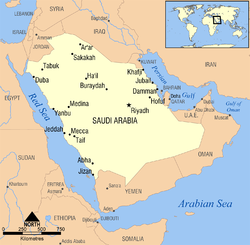
Saudi Arabia to host Design Law Treaty Diplomatic Conference

Standard YouTube Licence

A diplomatic conference will take place in Riyadh between 11 and 22 Nov 2024 to conclude and adopt a design law treaty.   Although art 5quinquies of the Paris Convention for the Protection of Industrial Property requires industrial designs to be protected by all countries of the Paris Union how they are protected varies greatly from country to country.  Countries like the UK and EU member states provide a system of design registration.  Other countries like the USA grant design patents.  The purpose of the proposed treaty is to harmonize and facilitate the registration procedure.

A draft treaty and implementing regulations have already been proposed.  The proposed treaty consists of 32 articles covering abbreviations, general principles, filing, grace periods, publication, terms of protection, renewal, regulations and governance.  An agenda, timetable and social programme have also been published.  The proposed treaty will not affect contracting parties' obligations under the Hague Agreement or Section 4  of the Agreement on Trade-Related Aspects of Intellectual Property Rights ("TRIPs").

Further information on the conference can be contained from the World Intellectual Property Office and the Saudi Authority for Intellectual Property websites.  Anyone wishing to discuss this article may call me on +44 (0)20 7404 5252 during UK office hours or send me a message through my contact page,

Thursday, 9 January 2020

The New DIFC Intellectual Property Law - Patents and Utility Certificates


Jane Lambert


On 21 Nov 2019, a new Intellectual Property Law came into force in the Dubai International Financial Centre ("DIFC") which I discussed in my Introduction to, and Overview of, the New DIFC Intellectual Property Law on 11 Dec 2019.   The rights protected by the new law include patents and utility certificates.  A "utility certificate" is defined in the table to paragraph 3 of Schedule 1 of the new law as  "a right pursuant to the issuance of the deed of protection granted for an invention by Ministry where such inventions do not involve an inventive step sufficient for the grant of deed of patent."  Art 3 (3) of the DIFC IP law makes clear that it does not establish any registry for IP rights but any IP rights that are registered in the UAE under applicable federal IP Laws shall be recognized as valid and enforceable under this legislation in the DIFC.

Federal IP Laws

The DIFC is established in the Emirate of Dubai. Dubai is part of a federation of emirates known as the United Arab Emirates ("UAE").  The UAE is a member of the Gulf Cooperation Council ("GCC") which has established a GCC Patent Office.   Patents for the UAE may be granted by the Federal Ministry of Economy under Federal Law No. (31) For The Year 2006 pertaining to the Industrial Regulation and Protection of Patents, Industrial Drawings, and Designs ("Law 31 of 2006") or the GCC Patent Office under the Patent Regulation of the Cooperation Council for the Arab States of the Gulf ("GCC Patent Regulation").  As there is as yet no such thing as a GCC utility model, utility certificates for the UAE are available only from the Ministry of Economy under Law 31 of 2006.

Entitlement

Unless the invention is made by an employee, the rights to an invention shall belong to the inventor or his or her successor pursuant to art 13 (1) of the DIFC IP law.

If an invention is made within the scope of employment by an employee pursuant to an employment contract the employer will be the owner of the invention by virtue of s.12 (1) of the law unless agreed otherwise between the employer and employee in writing. An invention is deemed to have been made within the scope of employment if:
(a) the invention was made in the course of the normal duties of the employee, or in the course of duties falling outside the employee’s normal duties, but specifically assigned to the employee, and the circumstances, in either case, were such that an invention might reasonably be expected to result from the carrying out such duties (art 12 (2) (a)); or
(b) the invention was made in the course of the duties of the employee and, at the time of making the Invention, because of the nature of his duties and the particular responsibilities arising from the nature of his duties he had an obligation to further the interests of the employer (ar 12 (2) (b)).

Art 12 (3) further provides that unless otherwise agreed upon between the relevant parties in writing, if an invention falls outside an employee’s scope of employment but relates to an employer’s business or professional domain and has been conceived by the employee using primarily the employer’s resources such as know-how, documents, tools, premises and other facilities of the employer, the invention shall belong to the employer,. 

Employees' Duty to Notify

An employee must notify an employer of an invention as soon as practicable by way of a written report including all the technical details of the invention (art 12 (4)). 

Employees' Compensation

An employee to whom art 12 (3) applies shall be entitled to fair compensation in which his or her remuneration, the economic value of the invention and the benefits that the employer shall gain through the Invention shall be taken into consideration.

If the employer is not interested in using the invention that it is so notified of, it may in its sole discretion, assign all right, title and interest in the invention to the employee instead of paying the employee compensation for the invention if required under art 12 (3),.

 If an employer does not make an election of its interest in an invention that it was notified of pursuant to art 12 (4) through a written notice to the employee before the end of the employee’s employment contract, the employer is deemed to have made an election to keep the invention and either party may apply to the Court to determine the compensation due to the employee for the Invention unless otherwise agreed between the parties.


Monopoly

Art 8 provides that a patent or utility certificate shall confer on its owner the following exclusive right to exclude others from exploiting the Invention in the DIFC. Where the invention is a product, such exploitation shall include using, manufacturing, offering for sale, selling or importing the product.  Where the invention is a process or method, the owner shall enjoy the exclusive right to use the product or method including the exclusive right to market and distribute any product derived directly from such process or method.   Such owners will be assisted by art 11 (1) which provides that where the subject-matter of a patent is a process for manufacturing a product and the owner of the patent can show that a substantial likelihood exists that a product is manufactured by an infringer by such process but is unable through reasonable efforts to determine if such process was actually used in the manufacturing of the product, the burden of proving that the product is not manufactured by the process that is the subject of the patent shall move to the alleged infringer of the patent or utility certificate in any infringement proceedings in the DIFC

Infringement

Art 9 provides that those exclusive rights are infringed by the following acts if done in respect of at least one of the claims of a patent or utility certificate without the authority of the owner:
"(a) exploiting in or from the DIFC, for industrial or commercial purposes, an Invention protected by a patent or utility Certificate;
(b) using, manufacturing, selling, offering for sale in or from the DIFC, or importing into the DIFC, or possessing in the DIFC, with the intention to trade, products or processes protected by a patent or utility certificate, or products obtained using processes protected by a patent or utility certificate;
(c) inducing another person to infringe a patent or utility certificate in or from the DIFC, even if the inducer is located outside the DIFC; or
(d) cooperating with another party to an act of infringement of a patent or utility certificate in or from the DIFC, even if the other party is located outside the DIFC."
Art 9 (3) introduces a doctrine of equivalents into DIFC law:
"A claim granted under a Patent or Utility Certificate is considered to be infringed even though the alleged infringing product, process or method does not fall within the literal scope of the patent claim but nonetheless equivalent to the claimed invention. The construction of the claim is made in light of the entire specifications and drawings of the Patent or Utility Certificate involved."
Defences

Art 8 (2) provides that the rights referred to in art 8 (1) shall be restricted to acts that are undertaken for industrial or commercial purposes.  They shall not include acts relating to a product protected by a patent or utility certificate after its sale.  The last provision seems to introduce something akin to the US first sale doctrine into DIFC patent law.  The precise limit of this exception is likely to be the subject of litigation.

Art 10 (1) provides:
"A person has the right to exploit an Invention, product, process or method, which otherwise would constitute an infringement in the DIFC under Article 9, if in good faith, the person initiated an act of exploitation, or has made effective and serious preparations to initiate an act of exploitation before to the priority date of a Patent or Utility Certificate within the UAE."
However, that defence is limited because art 10 (2) adds:
"A person’s right to continue with an act of exploitation in the DIFC under Article 10(1) shall remain until:
(a) any products produced or acquired by that person inside the UAE prior to the grant of the relevant Patent or Utility Certificate, are sold, or otherwise exhausted; or
(b) until any machine used prior to the grant of the relevant Patent or Utility Certificate to execute any such patented process is expired,
provided that such right is a personal right and cannot be assigned or transferred to another person."
Anyone accused of infringing a patent or utility certificate can contend that the instrument is invalid but the person alleging invalidity is required by art 10 (4) to bear the burden of proof in respect of such invalidity. The court shall have the discretion to suspend the infringement proceedings until an order in respect of the validity of the patent or utility model is pronounced by the competent court.

Further Information

Anyone wishing to discuss this article or the DIFC intellectual property law generally may call me during normal British office hours on +44 (0)20 7404 5252 or send me a message through my contact page.

Wednesday, 11 December 2019

Introduction to, and Overview of, the New DIFC Intellectual Property Law


Jane Lambert

With its FinTech Hive and Courts of the Future initiative, the Dubai International Financial Centre ("the DIFC") is acquiring intellectual assets in financial, legal and other technologies that require legal protection. Of course, Gulf Cooperation Council patents and Emirati copyrightstrade marks and other intellectual property rights apply as much to the DIFC as they do to any other part of Dubai but those rights have been enforced up to now by the Arabic speaking civil law courts and not by the English speaking. common law DIFC courts. The only intellectual property matters that fell within the jurisdiction of those courts were those relating to breaches of confidence and passing off.

By an enactment notice (the equivalent on a commencement order) dated 14 Nov 2019,  a new intellectual property law, known as Intellectual Property Law DIFC Law No 4 of 2019. came into force on 21 Nov 2019.  The new law consists of 68 articles arranged in 7 Parts plus 3 schedules.  Part 1 (arts 1 to 6) deals with general matters, Part 2 (arts 7 to 16) with patents, utility certificates, industrial drawings and designs, Part 3 (arts 17 to 42) with copyright, Part 4 (arts 43 to 51) with trade marks and trade names, Part 5 (arts 52 to 55) with trade secrets, Part 6 (arts 56 to 65) with a new Commissioner of Intellectual Property; and Part 7 (arts 66 to 68) with remedies and sanctions.  Schedule 1 is concerned with interpretation, Schedule 2 with the laws that have been taken into consideration when drafting this legislation and Schedule 3 with fines for various infringements.

The law was enacted after a consultation which began in March and ended on 17 April 2019.  The consultation document was accompanied by a draft of the proposed law and a response form.  Para10 of the consultation document noted:
"Intellectual property rights are increasingly becoming the most important intangible assets of any business. In addition, technology and innovation are the driver for investment in today’s business. In DIFC, the growing interest in technology and innovation in the financial sector, has translated into the recent establishment of the first FinTech related accelerator - FinTech Hive."
Para 12 added that the purpose of the new law was to enable the DIFC to be a safe environment for creativity and innovation and to enable DIFC entities to protect their intellectual property rights within the DIFC. Para 17 adds that the proposed law recognizes the UAE registered trade marks, patents, utility certificates and industrial designs and drawings and does not require separate registration in the DIFC. It is aligned with the UAE federal laws relating to IP, and focuses only on the enforcement of IP rights in the DIFC.

Art 3 (1) of the Law provides that the enactment applies in the jurisdiction of the DIFC. By virtue of art 3  (2), it applies to any person who owns or claims ownership, uses or attempts to use, or who seeks to enforce or protect an intellectual property right, or any part thereof, in the DIFC. However, art 3 (3) makes clear that law applies to any person who owns or claims ownership, uses or attempts to use, or who seeks to enforce or protect an intellectual property right, or any part thereof, in the DIFC. Art 7 recognizes any patent or utility certificate that is valid under federal IP law  Similarly, art 14 recognizes as valid any drawing or industrial design that is valid in the UAE,  Correspondingly, art 43 recognizes federal trade marks.  Slightly different arrangements are made for copyrights and related rights. Art 17 provides:
"Notwithstanding Article 19, a Work recognised as subject to copyright protection under the Federal Copyright Law is recognised as valid for purposes of this Law and is protected and enforceable in the DIFC"
However, art 18 and subsequent provisions appear to create an independent DFIC copyright.  Curiously, Part 5 seems to establish a DIFC trade secrets law without any reference to art 37 of the Law of Obligations which covers the obligations of confidence. Nor is there ant reference to art 38 of that Law which provides for passing off.

The most interesting provisions of the new Law relate to the Commissioner of Intellectual Property, Art 5 provides that the Law and any legislation made for the purpose of that Law shall be administered by the Commissioner. He or she has very extensive powers under art 59:
"(1) The Commissioner of Intellectual Property has such powers, duties and functions as conferred on him under this Law and any Regulation made under this Law and shall exercise such powers and perform such functions in pursuit of the objectives of this Law and the Regulations.
(2) In performing his functions and exercising his powers, the Commissioner of Intellectual Property shall pursue the following objectives:
(a) to promote greater awareness and public understanding of intellectual property and the requirements of this Law and the Regulations in the DIFC, and
(b) to promote good practices and observance of the requirements of this Law and the Regulations by the registered entities in the DIFC. 
(3) Without limiting the generality of Article 59(1), such powers and functions of the Commissioner of Intellectual Property shall include:
(a) receiving and deciding on all complaints or disputes filed in connection with the Law in the DIFC, and imposing fines for non-compliance with this Law and any related Regulations;
(b) coordinating with the UAE Federal and Local authorities on facilitating and promoting protection of intellectual property rights for DIFC persons;
(c) preparing or causing to be prepared in a timely and efficient manner;
(i) draft Regulations;
(ii) draft standards or codes of practice; and
(iii) guidance; reasonably required to enable him to perform his statutory functions; 
(d) submitting such draft Regulations, draft standards, and draft codes of practice to the DIFCA Board of Directors for approval and advising it of any guidance that is issued;
(e) making recommendations to the DIFCA Board with respect to fees, procedures and executive regulations for the Commissioner of Intellectual Property, which the DIFCA Board may promulgate;
(f) employing and appointing persons on such terms as he considers appropriate to assist him in the exercise of his powers and performance of his functions;
(g) where he considers it appropriate to do so, delegating any of his functions and powers; as may more efficiently and effectively be performed by officers and employees of the Commissioner of Intellectual Property, and with the approval of the DIFCA Board of Directors, either generally or in relation to any particular matter, to any other person.
(h) prescribing forms to be used for any of the purposes of this Law or any legislation administered by the Commissioner of Intellectual Property;
(i) acquiring, holding and disposing of property of any description;
(j) making contracts and other agreements;
(k) with the prior consent of the President and Board of Directors of the DIFCA, borrowing monies and providing security for such borrowings;
(l) exercising and performing such other powers and functions as may be delegated to the Commissioner of Intellectual Property by the Board of Directors of the DIFCA pursuant to the provisions of this Law, and
(m) assisting in complying with the United Arab Emirates’ obligations under any international treaty or other agreement to which the United Arab Emirates is a party through the exercise of his powers and functions. 
(4) The Commissioner of Intellectual Property has power to do whatever he deems necessary, for or in connection with, or reasonably incidental to, the performance of his functions.
(5) In exercising his powers and performing his functions, the Commissioner of Intellectual Property shall act in an independent matter."
The Commissioner shall have wide powers under art 66 to deter or punish infringements of rights subsisting under this legislation.  These powers shall be without prejudice to the power of the DIFC courts to grant injunctions and award damages pursuant to art 67 (1) of the new law   There is a right of appeal to the DIFC courts from decisions of the Commissioner under art 68 (1).

Over the next few months, I shall study in detail the IP provisions relating to patents, designs, trade marks and other IP rights.  In the meantime, anyone wishing to discuss this enactment or IP law in the United Arab Emirates generally should call me on +44 (0)20 5404 5252 or send me a message through my contact form


Tuesday, 22 October 2019

Qatar at the WIPO


Standard YouTube Video


Jane Lambert

Yesterday, I attended the WIPO Conference "As the UDRP turns 20: looking back, looking ahead" on domain name disputes at the Organization's head office in Geneva. Next to our meeting, there was an exhibition about Qatar and some kind of reception.  As I have written quite a lot about Qatar and the Qatar Financial Centre with its own legal system based on English law, in particular, I toured the stands.

Qatar has been in the news a lot lately for good things such as the recent IAAF World Athletics Championships last month and the 2022 FIFA World Cup as well as more troubling things like the ongoing dispute with its neighbours which I mentioned briefly in How will the Blockade of Qatar affect IP Law in the GCC Countries? on 7 June 2017.  An official on one of the stands agreed that the breakdown of regional cooperation was a concern but he points out that it had not stopped Qatar from investing heavily in upgrading its already impressive infrastructure.

I asked specifically about patents and whether Gulf Cooperation Council patents still had force in Qatar and whether the inventions of Qatari inventors were protected in other GCC states.  The official could not answer my question beyond saying that Qatar does not apply for a large number of patents.  The table of European patent applications by country between 2009 and 2018 on the European Patent Office's website suggests that he may well be right. However, he pointed out that his country has robust copyright laws and he handed me a short leaflet entitled "We Protect Your Right" published by the Ministry for Industry and Commerce with some basic information on copyright registration.  I was also handed a copy of a gallery guide to the National Museum of Dohar 

That leaflet on copyright registration appeared to be the only literature in English on intellectual property at the exhibition but there is a statistical country profile on Qatar on the WIPO website.  It would appear from WIPO's country profile that Qatar is party to the Paris, Berne and other international agreements and has comprehensive intellectual property laws.

Anyone wishing to discuss this article or Qatari IP law generally should contact me on +44 (0)20 7404 5252 during British office hours or message me through my contact page,

Monday, 17 August 2015

After the oil runs dry - protecting inventions from GCC countries overseas

Beam pump in the West Kern Oil Museum in Tait, California, USA
Photo Konrad Summers
Creative Commons Licence
Source Wikipedia


Over the last few years the governments of the Gulf states have invested heavily in education and research to diversify their economies and lessen their dependence on oil and gas.  Saudi Arabia founded what is now the King Abdulaziz City for Science and Technology in 1977. Dubai established its International Academic City in 2007. The Qatar Foundation has set up Education City in Doha. Such investment appears to have led to good academic research but there have not yet been many applications for patents. Of the 205,268 applications for patents through the Patent Cooperation Treaty ("PCT") in 2013, Saudi Arabia accounted for 187, the United Arab Emirates 57, Oman 3 and Bahrain 2 (see page 41 of WIPO Facts and Figures 2014 ). As for applications to the Gulf Co-operation Council ("GCC") and national patent offices, there were 2,991 to the GCC 1,426 to the United Arab Emirates, 931 to Saudi Arabia, 332 to Qatar and 170 to Bahrain.

Patents are important because they confer a monopoly of a new invention. Art 28 (1) of the Agreement on Trade-Related Aspects of Intellectual Property Rights ("TRIPS") requires member states of the World Trade Organization to provide that:
"A patent shall confer on its owner the following exclusive rights:
(a) where the subject matter of a patent is a product, to prevent third parties not having the owner’s consent from the acts of: making, using, offering for sale, selling, or importing for these purposes that product;
(b) where the subject matter of a patent is a process, to prevent third parties not having the owner’s consent from the act of using the process, and from the acts of: using, offering for sale, selling, or importing for these purposes at least the product obtained directly by that process."
Such monopolies are granted to stimulate research and development.  By restricting the exploitation of a new invention to patent owners, inventors and their investors have an opportunity to recoup their expenditure and perhaps earn a little extra.

In order to maximize a new invention patents should be sought not just for the country in which the invention was invented but also for the countries where the invention or its products are likely to be sold and those in which they could be manufactured.  Two international agreements facilitate patenting of new inventions:
Art 4 of Paris gives applicants for patents up to 12 months priority from the date upon which they make their first application. The PCT facilitates simultaneous applications for patents in a number of countries from a single filing.

The first step for an inventor is to apply for a patent for his or her own country.  Before taking that step the inventor will probably wish to satisfy himself or herself that there is a market for the invention, that he or she can secure investment for it and similar matters. He or she may well be asked for particulars of the invention. if the inventor agrees to such a request he or she should make such disclosure only in confidence. The law of the Dubai International Financial Centre recognizes a duty of confidence (see DIFC Law of Confidence 27 Jan 2011). Inventors who wish to take advantage of such law should make sure that their confidentiality or non-disclosure agreements require the confidante to submit to the courts of the DIFC and provide for the agreement to be construed and enforced in accordance with DIFC law. We can advise you on the law of confidence of the DIFC and draft such agreements for you.

PCT applications proceed in two phases: 
  • an international phase where searches and examinations are carried out for novelty, inventiveness and utility on behalf of all parties to the PCT; and 
  • a national phase where individual offices determine whether an application complies with their national law. 
The reason for those two phases is that the basic requirements of patentability such as novelty, inventiveness and utility are shared by all countries but there are important differences from state to state in other requirements. For instance, art 52 (2) (c) of the European Patent Convention excludes programs for computers from the definition of "invention".  However, that paragraph is subject to art 52 (3) which provides:
"Paragraph 2 shall exclude the patentability of the subject-matter or activities referred to therein only to the extent to which a European patent application or European patent relates to such subject-matter or activities as such."
That provision has been incorporated into the laws of each of the parties to the Convention including the UK. Art 52 (2) (c) and (3) and their corresponding provisions in national law have been considered many times by the courts of the contracting states and the Boards of Appeal (internal tribunals) of the EPO over the years. It appears that an invention  can be patented even if it is implemented by a computer program so long as it is something more than a program. Thus, a patent can be granted for a digitally controlled machine tool even if it consists of a known components so long as the tool is novel, inventive and useful but not for the program that actuates the processor that controls the tool.

Because of such considerations, applications for patents should be drawn up by attorneys with experience of the PCT. Attorneys from firms with offices outside the GCC may offer an advantage in that regard and there are several UK firms with offices in the Gulf. We should be glad to effect introductions to such firms if so requested. The same firms will can offer sure footed support to GCC inventors in national and regional patent offices during the national phase.  Occasionally disputes over patentabiluty arise that have to be resolved in the Boards of Appeal or other courts and tribunals. We can represent GCC inventors in hearings before EPO Boards of Appeal, hearing officers representing the Comptroller in the UK Intellectual Property Office and the courts of England and Wales.

Patent enforcement can be expensive particularly in common law jurisdictions such as the UK. We advise GCC inventors to consider taking out IP insurance from the time they file their applications. We can introduce inventors to specialist brokers if need be.  Disputes over whether a patent has been infringed are resolved by the courts of the country in which the infringement takes place. If a GCC inventor's patent has been infringed in the UK we can offer advice and representation in the Patents Court and the Intellectual Property Enterprise Court of England and Wales. A number of European countries including the UK have agreed to establish a Unified Patent Court to resolve disputes over unitary and other European patents (see the Agreement on a Unified Patent Court of 19 Feb 2013). When that court opens we can advise and represent inventors before that court also. For further advice on our services see Jane Lambert IP Services from Barristers 6 April 2013 4 to 5 IP.

Should anyone wish to discuss this article or patent law or the law of confidence on general, he or she should call me on +44 (0)20 7404 5252 during normal office hours or send me a message through my contact form.

Saturday, 16 May 2015

Saudi Arabia: More IP Information in English


On 22 May 2011 I wrote Saudi Arabia: Overview of Intellectual Property Law. I supplemented that article with Information in English on Saudi Patent Law on 26 July 2014. In my first article I wrote:
"There is no intellectual property office as such. Patents, industrial designs, chip topographies and plant varieties are registered by the The King Abdulaziz City for Science and Technology ("KACST") which is also the Saudi Arabian national science agency, national laboratory and internet authority for the .sa country code top level domain."
KACST has now devoted a section of its website to patents, designs, semiconductor topographies and plant breeders' rights.

KACST now publishes the Saudi Law of Patents, Layout Designs of Integrated Circuits, Plant Varieties, and Industrial Designs (Royal Decree No. (M/27) dated 17/7/2004) and the Implementing Regulations of theLaw of Patents, Layout Designs ofIntegrated Circuits, Plant Varieties,and Industrial Designs in English. This legislation is supplemented by FAQ on patents, industrial designs, plant varieties and integrated circuits. There are links to the Paris Convention and TRIPS, flowcharts of the patent and design application processes and statistics.

Should anyone wish to discuss this article or Saudi intellectual property law in general, call me on +44 7404 5252 during office hours or use my contact form.

Saturday, 26 July 2014

Information in English on Saudi Patent Law


Because of the massive and rapidly increasing importance of Asia to the world economy the European Patent Office offers a range of Asian patent information services some of which are chargeable and others of which are free. Among the free services are virtual helpdesks on a number of countries including Saudi Arabia.

The Saudi virtual helpdesk consists of a series of FAQs.  Visitors who fail to find a solution to their problems among the FAQs are invited to complete an enquiry form. Those who want more specific answers to an FAQ are invited to email the International Legal Affairs team at the EPO.  Before reading the FAQs it is perhaps worth reading my articles:  "Patents: Gulf Co-operation Council" 23 Jan 2011 and "Saudi Arabia: Overview of Intellectual Property Law" 22 May 2011.  It will be recalled that patents can be granted either for Saudi Arabia alone by the Saudi Patent Office which is in the King Abdulaziz City for Science and Technology or for all the Gulf Co-operation Council states including Saudi Arabia by the GCC Patent Office. The EPO helpdesk provides information on patents granted by the Saudi Patent Office.

The EPO's FAQs are quire comprehensive. Here are some of the bits of information that I learned from the FAQs:-
"Computer programs as such are not patentable, but may be protected by copyright. Computer-related inventions may be patentable in Saudi Arabia if the requirements for patentability are met."
"All non-residents wishing to apply for a patent require an authorised Saudi Arabian representative. Applicants have to file a power of attorney which has been duly notarised and legalised by the consulate of Saudi Arabia."
"It is not possible at present to file a provisional application in order to get an early filing date in Saudi Arabia."
"It is not possible to submit third-party observations."
"The Saudi Arabian Patent Law does not include any provisions on patent term extensions or supplementary protection certificates (SPCs).
"Within 90 days from publication of the decision to grant, any interested party may apply for partial or total revocation of the patent.

Invalidation is possible for a third party at any time after grant and must be raised before a separate governmental body (Appeals Committee)."
The Saudi Patent Office also publishes FAQs on intellectual property, patents, industrial designs, plant varieties and integrated circuits and statistics on patents, designs and plant varieties.

Should anybody wish to discuss this article or any other topic he or she can contact me on +44 (0)20 7404 5252 during normal business hours or send me a message through my contact form. He or she can also send me a tweet, write on my wall or contact me through G+, Linkedin or Xing.

Sunday, 28 July 2013

The UAE's Bilateral Investment Treaties

A bilateral investment treaty ("BIT") is an agreement between two governments on the terms by which the nationals of each contracting party may invest in the territory of the other.   A typical BIT will oblige each government to accept investments from the nationals of the other, to treat such investments no less favourably than those of its own nationals or those of the investors of any other country, not to expropriate such investments without adequate compensation and to submit any dispute with an investor to arbitration through the International Centre for the Settlement of Investment Disputes ("ICSID").

BITs have existed for over 40 years but their potency first emerged in a claim by the US waste disposal company Metalclad Insulation Corporation ("Metalclad") against the Mexican government for compensation for the the refusal by the local and state authorities of permission to use a landfill site that Metalclad had acquired near the small town of Guadalcázar, San Luis Potosi for the disposal of toxic waste. Metalclad claimed that the refusal of planning permission amounted to "expropriation" of the landfill site and in their award of 30 Aug 2013 the arbitrators held that the company was right. They ordered the Mexican government to pay Metalclad US$16,685,000. Mexico challenged the award in the courts of British Columbia which was the province in which the arbitrators had sat and won a modest reduction of the damages but the result was seen as a victory for a medium size company against a sovereign government.

Since Metalclad there has been a spate of claims by private companies against states under BITs and some of these relate to intellectual property.   Legislation by the governments of Uruguay and Australia to discourage smoking by requiring cigarette companies to package cigarettes with graphic warnings in the case of Uruguay and plain packaging in the case of Australia have been challenged by the tobacco giant Philip Morris under Uruguay's BIT with Switzerland and Australia's with Hong Kong for expropriation of the multinational's trade marks in those countries. In the claim against Uruguay the arbitrators have recently decided that they have jurisdiction to entertain the claim (see their decision of 2 July 2013 to that effect).   In the claim against Australia the case is proceeding in the Permanent Court of Arbitration in the Hague. Both sides have instructed counsel, the claimants members of the English Bar and the Australians barristers from Australia (see the notice on the PCA's website and Philip Morris's press release of 21 Nov 2011.

The latest claim for compensation in respect of intellectual property is Eli Lilly & Co's for C$500 million against the Canadian government for the invalidation by the Canadian courts of two of its Canadian pharmaceutical patents.   Eli Lilly complains that the Canadian courts have developed a doctrine on utility called the "promise doctrine" which exists nowhere else in the world and results in the invalidation of patents that would be allowed elsewhere.  In Eli Lilly's submission such invalidation amounts to expropriation of its patents without adequate compensation and it has served a notice of intent to claim dated 13 June 2013.  I have written a short article on the claim in "Biting Back: Claiming Compensation from Foreign Governments under Bilateral Investment Treaties for Failing to provide Adequate IP Protection" 27 July 2013 as well as a more detailed article that has been accepted for publication in the EIPR.

In my article for the EIPR I have argued that if the invalidation of Eli Lilly's patents and indeed the refusal of planning permission for the use of Metlclad's landfill site amounts to "expropriation" then so too would the failure by a government to provide adequate intellectual property protection.   In this regard, it is worth remembering that the United Arab Emirates has 24 BITs including agreements with the following brand owing and design and technology exporting states:

It is of course worth remembering that BITs can work both ways.   The UAE has BITs with newly industrializing countries such as Bangladesh, Malaysia, Turkey and Vietnam where the Emirati interest is likely to be similar to those of investors from developed states. Similarly, Emiratis have substantial investments in stocks and real estate in London and other European capitals to which these BITs apply.

Should anyone wish to discuss this article, BITs in general or a particular issue call me on +44 (0)20 7404 5252 during office hours London time or fill out my contact form.   You can also follow me on FacebookLinkedin, twitter or Xing.

Thursday, 21 February 2013

Patent Law in Oman

I have already mentioned the intellectual property law of Oman ("Intellectual Property Law in Oman" 31 Aug 2011), the Intellectual property treaties and conventions to which Oman is party and its intellectual property office ("Gulf Co-operation Council Member States - Treaties and Intellectual Property Authorities" 10 May 2012). As Oman is party to the Gulf Co-operation Council Charter, those seeking patent protection in Oman can apply to the GCC Patent Office for a GCC patent or to the Ministry of Commerce and Industry of Oman for an Oman patent.  I discussed GCC patents in my article "Patents: Gulf Co-operation Council" on 21 Jan 2011.  In this article I shall consider the domestic patent law of Oman.

Legislation
The sources of this law are the Royal Decree No. 67/2008 relating to Industrial Property Rights and their Enforcement for the Sultanate of Oman ("the Decree") and Regulations No. 105/2008 under the Law on Industrial Property Rights & Their Enforcement for the Sultanate of Oman ("the Regulations"). The Decree came into force on the 17 May 2008 and the Regulations on the 2 Dec 2008. Both the Decree and Regulations provide for utility models, industrial designs, semiconductor topographies, trade marks, geographical indications and unfair competition as well as patents for inventions.

Registers
S.96 (1) of the Decree requires the Director of Intellectual Property (referred to as "the Registrar") to keep separate registers for patents, utility models, industrial designs, layout designs, marks, collective marks, certification marks and geographical indications.   Those registers are open to public inspection and  are maintained by the Oman Ministry of Commerce and Industry.

Patentability
A patent may be granted if the invention is "new, involves an inventive step and is industrially applicable" pursuant to s.3 (1) of the Decree,  S,2 (1) excludes the following from patent protection:
"(a) Discoveries, scientific theories and mathematical methods;
(b) Schemes, rules or methods for doing business, performing purely mental acts or playing games;
(c) Natural substances; this provision shall not apply to the processes of isolating those natural substances from their original environment;
(d) Known substances for which a new use has been discovered; this provision shall not apply to the use itself, where it constitutes an invention under Section 1;
(e) Animals other than micro-organisms, and essentially biological processes for the production of animals and their parts, other than non-biological and microbiological processes;
(f) Inventions, the prevention within the territory of Oman of the commercial exploitation of which is necessary to protect ordre public and morality; such exclusion shall not be made merely because the exploitation of those inventions is prohibited by law."

As for computer programs, s.2 (2) provides that s.3 (1) shall not apply to the following inventions:
"(a) Process inventions which, in whole or in part, consist of steps that are performed by a computer and are directed by a computer program; and
(b) Product inventions consisting of elements of a computer-implemented invention, including in particular:
(i) Machine-readable computer program code stored on a tangible medium such as a floppy disk, computer hard drive or computer memory; and
(ii) a general purpose computer whose novelty over the prior art arises primarily due to its combination with a specific computer program "

Applications
S.5 (1) provides:
"The application for a patent shall be filed with the Registrar and shall contain a request, a description, one or more claims, one or more drawings (where required), and an abstract. It shall be subject to the payment of the prescribed application fee."
Art 3 (1) of the Regulations requires applications for a patent to be made on a prescribed form which can be downloaded from the Ministry website together with the tariff of the applicable fees.  If the Registrar is of opinion that the Decree has been complied with he must grant a patent pursuant to s.10 (1).   Otherwise the application must be refused.

Scope of Monopoly
 S.11 (1) of the Decree provides that:

  • a patent shall confer on its owner the right to prevent third parties from exploiting the patented invention in Oman; and
  • the right of the patent owner is defined by the claims.
Patents are granted for 20 years (s.12 (1)) but are subject to compulsory licensing under s.13 and revocation under s.14.   Infringements of those rights are actionable in the courts of Oman under s.66 of the Decree.  Remedies include injunctions (interim as well as perpetual) and compensatory damages.

Further Information
Should anyone wish to discuss this article or any aspect of intellectual property law in Oman, he or she can call me on +44 (0)20 7404 5252 or send a message through my contact form.   I am now practising from 4-5 Gray's Inn Square in London which has considerable expertise in international and intellectual property law. You can also follow me on Facebook, Linkedin, twitter and Xing.

Saturday, 18 August 2012

Gulf Co-operation Council Patent Office Statistics

I mentioned the Gulf Co-operation Council Patent Office in Patents: Gulf Co-operation Council on 21 Jan 2011. The Office has now published its statistics on its website:
Number of Applications     22,018
Granted patents                 1,454
Non-valid applications         6,199
Applications in progress    13,719
Fir further information call me on +44 161 850 0080 or fill in my contact form. He or she can also contact me through Facebook, Linkedin, Xing or twitter..

Tuesday, 1 May 2012

Qatar Intellectual Property Law


Last Saturday morning I listened to a report on BBC Radio 4 by Razia Iqbal about the Qatar Philharmonic. This is the first and so far only symphony orchestra in the Gulf and it is developing an enviable reputation.  The great American conductor Lorin Maazel is said to have rated it among the great orchestras of the world.  Certainly they seem to have been very received in London as this YouTube clip from their performance of Marcel Khalife’s Arabian Concerto at the Royal Albert Hall, London, on 8 April 2010.shows.

The Qatar Philharmonic is just one of a number of cultural initiatives in this tiny kingdom. In her programme Iqbal discussed several of the others grouped in the Katara Cultural Village, a complex of museums, theatres, academies and auditoriums just outside Doha.   The cultural village is itself one of a number of other initiatives to transform Qatar's society and economy.   Others include the Qatar Financial Centre, the educational cluster with local campuses of no less than 8 first rate universities including University College London and the Qatar Science and Technology Park.  

These initiatives complement an active foreign policy and, of course, the international broadcasting service, Al-Jazeera which, together, have contributed greatly to political change throughout the Middle East and North Africa. With a land area slightly smaller than that of Yorkshire and less than half that county's population, Qatar punches well above its weight.

The cultural, educational, scientific and technical initiatives discussed above will flourish only with a strong intellectual property base.  Qatar has been a member of the World Trade Organization and hence party to TRIPS since 1 Jan 1996. It is party to the Berne and Paris Conventions though not to Rome but it has signed up to the WIPO Phonograms and Performances Treaty as well as to the WIPO Copyright Treaty. In accordance with TRIPS Qatar has enacted:
Qatar is, of course, party to the Gulf Co-operation Council and enforces patents issued by the the GCC Patent Office in its territories. Patents, copyrights and semiconductor topographies  appear to be the responsibility of the Ministry of Justice while trade marks, designs and geographical indications are the responsibility of the Ministry of Business and Trade.

Should anyone wish to discuss this topic further he or she can call me on +44 161 850 0080 or fill in my contact form. He or she can also contact me through Facebook, Linkedin, Xing or twitter.

Wednesday, 31 August 2011

Intellectual Property Law in Oman

Oman has an estimated population of 3.6 million in a land area of 309,501 square kilometres. It is a member of the Gulf Co-operation Council ("GCC") and the World Trade Organization ("WTO"). Formerly one of the least developed states in the Gulf, the Sultanate has made such rapid progress since 1970 in economic, political and social development that the United Nations Development Programme acclaimed Oman as the most improved country in the world (see the UNDP Human Development Report for 4 Nov 2010).

Treaties
As a member of the WTO Oman is party to TRIPS (the Agreement on Trade Related Aspects of Intellectual Property Rights) and is thereby bound by the obligations discussed in my article on "Intellectual Property Law in Kuwait". As a member of the GCC, the GCC Patent Regulation and Implementing Bylaws apply in Oman. Oman is also party to the Paris and Berne Conventions, the WIPO Copyright and Performances and Phonograms Treaties, the Patent and Trademark Law Treaties, the UPOV Convention and the Patent Co-operation Treaty, Madrid Protocol and Hague Agreement (see the WIPO Treaties Contracting Parties page for Oman).

Legislation
Oman implements its obligations under those treaties through a number of Royal Decrees made in 2000 on patents, copyrights and neighbouring rights, trade marks and unfair competition, industrial designs, geographical indications and semiconductor topographies. The Sultanate's copyright law has been supplemented by Royal Decree No. 65/2008 Promulgating the Law on Copyright and Related Rights and its law on industrial property rights by Royal Decree No 67/2008. Royal Decree No 49/2009 on the protection of plant breeders' rights has come into effect this year the text of which is available in Arabic.

Intellectual Property Office
The Ministry of Commerce and Industry is the intellectual property office for the Sultanate. The English language page of the Ministry's website suggests that it will soon be possible to file patent, utility model and trade mark applications on-line.

Dispute Resolution
Oman has enacted robust arbitration legislation which would resolve licensing, joint venture and other disputes relating to intellectual property. A press release on 16 March 2010 indicated that the Oman Chamber of Commerce and Industry planned to establish an international arbitration centre in the country. A delegation from the Bar of England and Wales visited Oman in December 2010 (see the Bar Council's press release of 3 Dec 2010).

Further Information
Oman is a country of considerable potential and one that I follow particularly closely. Anyone who wishes to discuss this article or any other issue concerning intellectual property law in the Gulf should call me on 0800 862 0055 or complete my contact form.

Thursday, 14 July 2011

Intellectual Property Law in Kuwait

Kuwait has an estimated population of just under 3.6 million in a land area of 17,820 square kilometres. It is one of the member states of the Gulf Co-operation Council ("GCC") (see "Gulf Co-operation Council Constitutional Framework" 10 June 2011 and "Patents: Gulf Co-operation Council" 20 Jan 2011).

International Obligations
This small but significant country is one of the founding members of the World Trade Organization ("WTO"). As such it is party to TRIPS (The Agreement on Trade Related Aspects of Intellectual Property Rights) which requires WTO members to give effect to the provisions of that agreement. That includes
Kuwait has been a member of the WIPO since 14 July 1998 but it does not appear to be party to the Paris or Berne Conventions or the Washington Treaty. Indeed, the only convention listed on the WIPO website to which Kuwait is party is the WIPO Convention.

The Kuwaiti government has entered a number of bilateral investment treaties with a number of countries (though not with HM government) which usually require the protection of intellectual property. Citizens of either party can sometimes claim compensation in ICSID (International Centre for the Settlement of Investment Disputes) against the government of the other party for non-compliance with such a treaty (see Metalclad Corp. v Mexico (30 Aug 2000)).

Legislation
A summary of Kuwait intellectual property laws and related legislation appears in WIPO lex. The main statutes appear to be:
  • Law number 4 of 1962 relating to patents, designs and industrial models as amended by law number 3 of 2001 (Arabic and English);
  • Law number 64 of 1999 concerning intellectual property rights (Arabic and English); and
  • Decree number 68 of 1980 on trade marks as amended by decree no 10 of 1987 (Arabic only).
As Kuwait is party to the GCC, the Patent Regulation and the Implementing Bye-laws of the GCC will also apply.

Dispute Resolution
Industrial property disputes can be resolved through arbitration pursuant to Law No. 11 of 1995 regarding judicial arbitration with respect to civil and commercial matters (Arabic and English). The Kuwait Chamber of Commerce and Industry appears to provide arbitration services.

Intellectual Property Offices
According to WIPO the competent authority for patents and trade marks is the Trade Marks and Patent Department of the Ministry for Commerce and Industry at PO Box 2944, Safat 13030, Kuwait City, Tel +956 22 42 44 26. That Ministry is also responsible for copyright policy.

The GCC Patent Office is at the GCC Offices, PO Box 340227, Riyadh, Saudi Arabia 11333 (see Patents: Gulf Co-operation Council 20 Jan 2011).

Further Information
Anyone requiring further information about this article should call me on 0800 962 0055 or use my contact form. I have two contacts in Kuwait to whom I shall be glad to refer any enquiries on any substantial issue of Kuwaiti law.

Sunday, 22 May 2011

Saudi Arabia: Overview of Intellectual Property Law


Saudi Arabia has been party to the Berne Copyright and Paris Industrial Property Conventions since the 11 March 2004 and a member of the World Trade Organization since 11 December 2005.

Its basic intellectual property statutes are:
Unofficial translations of these statutes and other legislation are to be found on the Saudi Arabia resources page of the WIPO website.

There is no intellectual property office as such. Patents, industrial designs, chip topographies and plant varieties are registered by the The King Abdulaziz City for Science and Technology ("KACST") which is also the Saudi Arabian national science agency, national laboratory and internet authority for the .sa country code top level domain. Trade Marks are registered by a department of the Ministry of Commerce known as the Trademarks Register while copyright and related rights are the responsibility of the Ministry of Culture.

According to the statistics page of the KACST website, there were 931 patent and 493 industrial design applications in 2010 and 262 patents and 412 design registrations were granted in that year.

Further information on Saudi Arabian intellectual property law can be obtained from Jane Lambert

Friday, 21 January 2011

Patents: Gulf Co-operation Council

The Gulf Co-operation Council (Co-operation Council for the Arab States of the Gulf) is an economic, political and to some extent military union of the states of Bahrain, Kuwait, Oman, Qatar, Saudi Arabia and the United Arab Emirates. The Council's objectives are
  • To effect coordination, integration and inter-connection between Member States in all fields in order to achieve unity between them.
  • To deepen and strengthen relations, links and areas of cooperation now prevailing between their peoples in various fields
  • To formulate similar regulations in various fields including the following: Economic and financial affairs Commerce, customs and communications Education and culture
  • To stimulate scientific and technological progress in the fields of industry, mining, agriculture, water and animal resources; to establish scientific research; to establish joint ventures and encourage cooperation by the private sector for the good of their peoples.
To further the last objective the Supreme Council of the Gulf Co-operation Council has established a Gulf Co-operation Patent Office ("GCCPO") at Riyadh in Saudi Arabia. The GCCPO grants Gulf Co-operation Council patents for inventions which stand alongside national patents in all the GCC member states. The legislation establishing the GCC patent is the Patent Regulation for the Co-operation Council for the Arab States of the Gulf.

The GCCPO opened for applications on 3 Oct 1998. A list of granted patents appears in a journal known as the "Bulletin Patents" which is published on the GCCPO website.

Related Articles