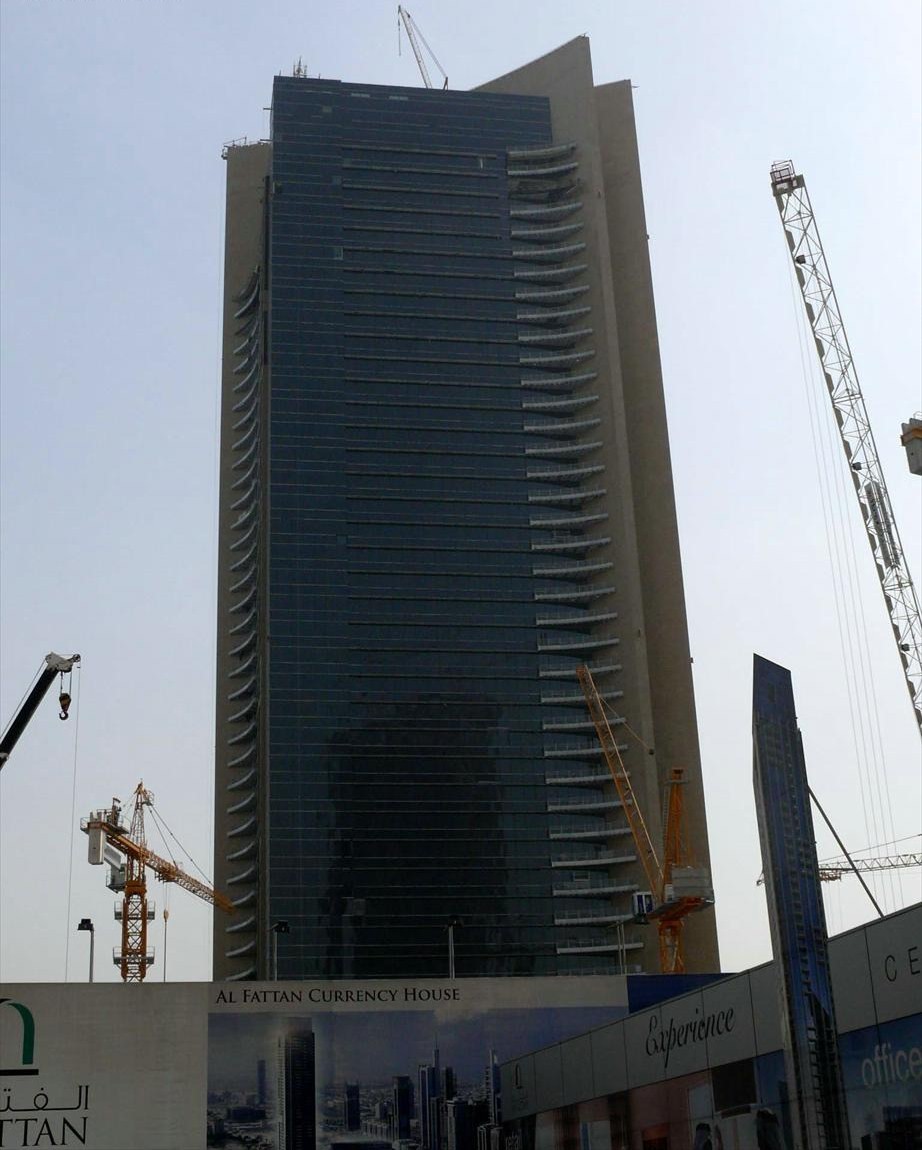
Showing posts with label Ministry of Economy. Show all posts

Sunday, 7 June 2020

The New DIFC Intellectual Property Law - Designs

Author Imre Salt Licence CC BY-SA 3.0 Deed Source Wikimedia Commons

On 21 Nov 2019, a new intellectual property law known as Intellectual Property Law DIFC Law No 4 of 2019. came into force in the Dubai International Financial Centre.  I wrote an introduction to, and overview of the new law on 11 Dec 2019 and discussed its provisions on patents and utility models (known as "utility certificates" in the DIFC) in The New DIFC Intellectual Property Law - Patents and Utility Certificates on 9 Jan 2020. In this article, I discuss Chapter 2 of Part 2 of the Law on General Rules on Industrial Drawings and Industrial Designs.

Design is important to Dubai   A report commissioned by The Dubai Design & Fashion Council and the Dubai Design District expected the design sector, which includes architecture, fashion, graphic, interior and product design, to grow by 6% a year between 2016 and 2021.  The Dubai government supports designers through the Council by providing advice and information on intellectual property and other legal services.  Well before the new Intellectual Property Law came into force, the Council agreed with the DIFC Disputes Resolution Authority to incorporate a DIFC choice of law clause into their contracts and designate the DIFC Dispute Resolution Authority for the resolution of disputes (see Designer Courts  12 March 2018 DIFC Courts press release).

The new DIFC design law is compressed into three short articles:
  • Art 14 confirms that the registration of Industrial Drawings and Industrial Designs with the UAE Ministry of Economy is recognized in the DIFC and that the rights conferred by registration will be enforced in the DIFC;
  • Art 15 sets out the rights conferred by registration; and
  • Art 16 applies the provisions on entitlement and infringement in patent and utility certificates law to Industrial Drawings and Industrial Designs.
The table in para 3 of Sched 1 to the Law defines an Industrial Drawing as:
"Any innovative creation of lines and colors which generate a product that can be used in any industry or craft and in respect of which the Ministry has issued a deed of protection."
The same table defined an Industrial Design as:
"any innovative three-dimensional shape that can be used in industry or craft and in respect of which the Ministry has issued a deed of protection."
Applications to register Industrial Drawings and Industrial Designs are made to the Ministry.  The patent application portal appears to indicate that it is possible to apply for registration through that page but it has not been possible to obtain confirmation through the chat facility.

As art 16 applies the provisions of arts 9 to 13 to Industrial Drawings and Industrial Designs, the rules as to entitlement and employees' compensation are4 the same as for patents. Readers are referred to my article on patents and utility certificates of 9 Jan 2020.

Art 15 (1) of the Law confers on the registered proprietor of an Industrial Drawing or Industrial Design the following exclusive rights:
"(a) using the Industrial Drawing or Industrial Design in manufacturing any product;
(b) using, selling, or offering for sale any product relating to the Industrial Design or Industrial Drawing;
(c) importing any product using an Industrial Drawing or an Industrial Design; or
(d) possessing an Industrial Drawing or an Industrial Design with intention to use, or offer for sale, or sell the same."
Art 15 (2) makes clear that the rights referred to in art15 (1) shall be restricted to acts that are undertaken for industrial or commercial purposes and shall not extend to acts relating to a protected product after its sale.  This is similar to art 8 (2) for patents and utility certificates and seems to indicate the incorporation into DIFC law of something like the US first sale doctrine.

The rules on infringement, defences to patent infringement and reversal of,  the burden of proof that apply to patents and utility certificates under arts 9 to 11 are applied to Industrial Drawings and Industrial Designs by art 16. References in those articles to "patents" or "utility certificates"are deemed to refer to "Industrial Drawings" or "Industrial Designs" as the case may require.  Once again, readers are referred to my article on patents and utility certificates.

Anyone wishing to discuss this article or DIFC design law generally should call my clerk on  +44(0)7986 948267 or send me a message through my contact page while this emergency continues, I shall gladly respond by phone, VoIP or email,


Thursday, 9 January 2020

The New DIFC Intellectual Property Law - Patents and Utility Certificates


Jane Lambert


On 21 Nov 2019, a new Intellectual Property Law came into force in the Dubai International Financial Centre ("DIFC") which I discussed in my Introduction to, and Overview of, the New DIFC Intellectual Property Law on 11 Dec 2019.   The rights protected by the new law include patents and utility certificates.  A "utility certificate" is defined in the table to paragraph 3 of Schedule 1 of the new law as  "a right pursuant to the issuance of the deed of protection granted for an invention by Ministry where such inventions do not involve an inventive step sufficient for the grant of deed of patent."  Art 3 (3) of the DIFC IP law makes clear that it does not establish any registry for IP rights but any IP rights that are registered in the UAE under applicable federal IP Laws shall be recognized as valid and enforceable under this legislation in the DIFC.

Federal IP Laws

The DIFC is established in the Emirate of Dubai. Dubai is part of a federation of emirates known as the United Arab Emirates ("UAE").  The UAE is a member of the Gulf Cooperation Council ("GCC") which has established a GCC Patent Office.   Patents for the UAE may be granted by the Federal Ministry of Economy under Federal Law No. (31) For The Year 2006 pertaining to the Industrial Regulation and Protection of Patents, Industrial Drawings, and Designs ("Law 31 of 2006") or the GCC Patent Office under the Patent Regulation of the Cooperation Council for the Arab States of the Gulf ("GCC Patent Regulation").  As there is as yet no such thing as a GCC utility model, utility certificates for the UAE are available only from the Ministry of Economy under Law 31 of 2006.

Entitlement

Unless the invention is made by an employee, the rights to an invention shall belong to the inventor or his or her successor pursuant to art 13 (1) of the DIFC IP law.

If an invention is made within the scope of employment by an employee pursuant to an employment contract the employer will be the owner of the invention by virtue of s.12 (1) of the law unless agreed otherwise between the employer and employee in writing. An invention is deemed to have been made within the scope of employment if:
(a) the invention was made in the course of the normal duties of the employee, or in the course of duties falling outside the employee’s normal duties, but specifically assigned to the employee, and the circumstances, in either case, were such that an invention might reasonably be expected to result from the carrying out such duties (art 12 (2) (a)); or
(b) the invention was made in the course of the duties of the employee and, at the time of making the Invention, because of the nature of his duties and the particular responsibilities arising from the nature of his duties he had an obligation to further the interests of the employer (ar 12 (2) (b)).

Art 12 (3) further provides that unless otherwise agreed upon between the relevant parties in writing, if an invention falls outside an employee’s scope of employment but relates to an employer’s business or professional domain and has been conceived by the employee using primarily the employer’s resources such as know-how, documents, tools, premises and other facilities of the employer, the invention shall belong to the employer,. 

Employees' Duty to Notify

An employee must notify an employer of an invention as soon as practicable by way of a written report including all the technical details of the invention (art 12 (4)). 

Employees' Compensation

An employee to whom art 12 (3) applies shall be entitled to fair compensation in which his or her remuneration, the economic value of the invention and the benefits that the employer shall gain through the Invention shall be taken into consideration.

If the employer is not interested in using the invention that it is so notified of, it may in its sole discretion, assign all right, title and interest in the invention to the employee instead of paying the employee compensation for the invention if required under art 12 (3),.

 If an employer does not make an election of its interest in an invention that it was notified of pursuant to art 12 (4) through a written notice to the employee before the end of the employee’s employment contract, the employer is deemed to have made an election to keep the invention and either party may apply to the Court to determine the compensation due to the employee for the Invention unless otherwise agreed between the parties.


Monopoly

Art 8 provides that a patent or utility certificate shall confer on its owner the following exclusive right to exclude others from exploiting the Invention in the DIFC. Where the invention is a product, such exploitation shall include using, manufacturing, offering for sale, selling or importing the product.  Where the invention is a process or method, the owner shall enjoy the exclusive right to use the product or method including the exclusive right to market and distribute any product derived directly from such process or method.   Such owners will be assisted by art 11 (1) which provides that where the subject-matter of a patent is a process for manufacturing a product and the owner of the patent can show that a substantial likelihood exists that a product is manufactured by an infringer by such process but is unable through reasonable efforts to determine if such process was actually used in the manufacturing of the product, the burden of proving that the product is not manufactured by the process that is the subject of the patent shall move to the alleged infringer of the patent or utility certificate in any infringement proceedings in the DIFC

Infringement

Art 9 provides that those exclusive rights are infringed by the following acts if done in respect of at least one of the claims of a patent or utility certificate without the authority of the owner:
"(a) exploiting in or from the DIFC, for industrial or commercial purposes, an Invention protected by a patent or utility Certificate;
(b) using, manufacturing, selling, offering for sale in or from the DIFC, or importing into the DIFC, or possessing in the DIFC, with the intention to trade, products or processes protected by a patent or utility certificate, or products obtained using processes protected by a patent or utility certificate;
(c) inducing another person to infringe a patent or utility certificate in or from the DIFC, even if the inducer is located outside the DIFC; or
(d) cooperating with another party to an act of infringement of a patent or utility certificate in or from the DIFC, even if the other party is located outside the DIFC."
Art 9 (3) introduces a doctrine of equivalents into DIFC law:
"A claim granted under a Patent or Utility Certificate is considered to be infringed even though the alleged infringing product, process or method does not fall within the literal scope of the patent claim but nonetheless equivalent to the claimed invention. The construction of the claim is made in light of the entire specifications and drawings of the Patent or Utility Certificate involved."
Defences

Art 8 (2) provides that the rights referred to in art 8 (1) shall be restricted to acts that are undertaken for industrial or commercial purposes.  They shall not include acts relating to a product protected by a patent or utility certificate after its sale.  The last provision seems to introduce something akin to the US first sale doctrine into DIFC patent law.  The precise limit of this exception is likely to be the subject of litigation.

Art 10 (1) provides:
"A person has the right to exploit an Invention, product, process or method, which otherwise would constitute an infringement in the DIFC under Article 9, if in good faith, the person initiated an act of exploitation, or has made effective and serious preparations to initiate an act of exploitation before to the priority date of a Patent or Utility Certificate within the UAE."
However, that defence is limited because art 10 (2) adds:
"A person’s right to continue with an act of exploitation in the DIFC under Article 10(1) shall remain until:
(a) any products produced or acquired by that person inside the UAE prior to the grant of the relevant Patent or Utility Certificate, are sold, or otherwise exhausted; or
(b) until any machine used prior to the grant of the relevant Patent or Utility Certificate to execute any such patented process is expired,
provided that such right is a personal right and cannot be assigned or transferred to another person."
Anyone accused of infringing a patent or utility certificate can contend that the instrument is invalid but the person alleging invalidity is required by art 10 (4) to bear the burden of proof in respect of such invalidity. The court shall have the discretion to suspend the infringement proceedings until an order in respect of the validity of the patent or utility model is pronounced by the competent court.

Further Information

Anyone wishing to discuss this article or the DIFC intellectual property law generally may call me during normal British office hours on +44 (0)20 7404 5252 or send me a message through my contact page.