Showing posts with label UAE. Show all posts

Friday, 24 January 2025

DIFC IP Law Update 2025

Dubai Creek


Jane Lambert

As a result of such initiatives as the Innovation Hub and the Metaverse Platform, new products and services are being developed in the Dubai International Financial Centre ("DIFC") in such technologies as fin-tech, virtual reality and artificial intelligence. They will require legal protection in the DIFC and beyond.  That is not as straightforward in the DIFC as it is in the rest of Dubai because the DIFC has its own legal system. It is for that reason that the Ruler of Dubai proclaimed the DIFC Intellectual Property Law (DIFC Law No. 4 of 2019) on 14 Nov 2019.

That law does not establish any IP rights for the DIFC as such.  It implements the existing intellectual property laws of the United Arab Emirates ("UAE") in the DIFC and provides for their enforcement.  These are:

The relationship between those federal enactments and DIFC Intellectual Property Law is explained in my article Introduction to, and Overview of, the New DIFC Intellectual Property Law which I wrote on 11 Dec 2019.

In that article, I observed that:
"The most interesting provisions of the new Law relate to the Commissioner of Intellectual Property, Art 5 provides that the Law and any legislation made for the purpose of that Law shall be administered by the Commissioner."

The first Commissioner was Dr Tarek Hajjiri and he gave a very interesting interview to Mariam Sabet on YouTube at the INTA virtual conference in 2021.  Dr Hajjiri held that appointment until 2023 and his successor is Katherine Nixon.

I noted that the Commissioner has very extensive powers under art 59 (3) of the DIFC Intellectual Property Law in my article.  Art 59 (3) (a) requires him or her to receive and decide on all complaints or disputes filed in connection with the law in the DIFC, and to impose fines for non-compliance with the Law and any related regulations.  Drafting those regulations and submitting them to the DIFC Directors was another of the Commissioner's responsibilities,  The DIFC Intellectual Property Regulations came into force on 5 July 2021. 

As I stated in The New DIFC Intellectual Property Law - Patents and Utility Certificates on 9 Jan 2020, anyone seeking a patent for the DIFC may apply to the Gulf Cooperation Council Patent Office for a GCC patent or to the federal Ministry of Economy for a UAE patent.  I wrote about GCC patents in Patents: Gulf Co-operation Council on 21 Jan 2011.  The Ministry of Economy is also the appropriate authority for the registration of utility certificates, trade marks, industrial designs and the layout of integrated circuits that apply to the DIFC.  The UAE is party to the Patent Cooperation Treaty ("PCT") and the Madrid Protocol.

IP rights that do not have to be registered with the UAE Ministry of Economy include copyrights, rights in performances and other neighbouring rights and the right to prevent unauthorized use or disclosure of trade secrets.  I discussed those rights in The New DIFC Intellectual Property Law - Copyright and Neighbouring Rights on 28 June 2020 and DIFC Trade Secrecy Law on 7 July 2021.  Two IP rights that predate the new Law are the rights to enforce an obligation of confidence under art 37 of the Law of Obligations DIFC Law No. 5 of 2005 and the right to bring an action for passing off under art 38.. I wrote about the duty of confidence in DIFC Law of Confidencon 27 Jan 2021 and The DIFC Law of Passing off on 7 April 2011.

A rights owner who believes that his or her right has been infringed has the choice of complaining to the Commissioner under art 59 (3) (a) of the DIFC Intellectual Property Law and art 2 or bringing an infringement action in the Court of First Instance.   By far the cheaper and less formal procedure is to complain to the Commissioner.  Complainants complete a simple form and pay an initial fee of US$500. By contrast, the fees for issuing a claim form range from US$1,500 to US$130,000 depending on the value of the claim.  The Commissioner has jurisdiction to hear claims under the Law but not for breach of confidence or passing off.  The Court, on the other hand, can grant interim injunctions including search orders and freezing injunctions.  It can also conduct inquiries as to damages and accounts of profits. Most complainants, particularly startups and small and medium enterprises, will complain to the Commissioner and the DIFC has prepared a helpful guide to assist them,  Those with urgent high-value claims are likely to prefer the courts.

Although there is no intellectual property division in the Court of First Instance the Technology and Construction Division will hear claims relating to the design, supply and/or installation of computers, computer software and related network and information technology systems and services under Rule 56 (3) (5) of the DIFC Court Rules. Similarly, the Digital Economy Court will hear claims involving:

"(1) fintech;
(2) digital assets, including the digital environment, platform or system in which a digital asset exists or may exist;
(3) distributed ledger technology and blockchains including applications based on blockchain technology;
(4) substantial or complex databases;
(5) artificial intelligence and any devices or components of devices whether integrated or not that are dependent on or controlled by artificial intelligence;
(6) data stored digitally including on cloud or other remote platforms, including distributed ledger technology;
(7) e-commerce, online intermediaries, digital payment platforms or marketplaces which include virtual asset service providers in relation to: exchange between virtual currencies; exchange between virtual and fiat currencies; the safe-keeping or administration of virtual assets; or, enabling participation in financial services connected to the offer or sale of virtual assets;
(8) interactions and transactions within virtual reality and the Web3 economy, including digital peer-to-peer transactions;
(9) the application of automatic dispute resolution processes;
(10) decentralised autonomous organisations (DAOs), decentralised finance vehicles (DeFi) and decentralised applications (DApps);
(11) the validity of digital signatures and digital identification and verification systems;
(12) the design, supply and /or installation of computers, computer software and related network and information technology systems and services;
(13) cyber-physical systems such as unmanned aerial vehicles, 3D printing technologies, and robotics;
(14) intellectual property claims arising out of or in relation to any of the above claims;
(15) insurance claims arising out of or in relation to any of the above claims;
(16) claims under the DIFC Data Protection Law (Law 5 of 2020); and
(17) any combination of the above claims."

under Rule 58 (7).

As all the IP rights enjoyed in the DIFC except the obligation of confidence and the law of passing off are established under federal law it is conceivable that conflicts will arise between rights existing in one system and those existing in the other.   The Ruler of Dubai jas recently established a Conflicts of Jurisdiction Tribunal to resolve such disputes.

Anyone wishing to discuss this article may call me on +44 (0)20 7404 5252 during UK office hours or send me a message through my contact form.

Saturday, 8 April 2023

IPO Guidance on the Gulf Cooperation Council

 Logo of Gulf Cooperation Council

Jane Lambert

On 6 April 2023 the UK Intellectual Property Office ("the IPO") circulated an email headed "Are you a UK business trading in the Gulf Cooperation Council (GCC)? Or thinking of doing so?" to its mailing list, The email announced that the IPO had published guidance to help businesses navigate the IP regimes in each of the six GCC member states providing information on the main IP rights and where to go for further guidance,  It added that the GCC was the UK's 7th largest export market worth £33.1 billion in 2021, that the UK has a longstanding relationship with the GCC, particularly in areas like technology, life sciences, creative industries, financial services and education, and that intellectual property will play a vital role in securing British ambitions in the region.

International IP Service

A button on the email connects to a web page on the British government's website headed Collection International IP Service with the strapline "Protecting your trade marks, patents, designs and copyright abroad" which was first published on 20 Aug 2021 and last updated on 10 March 2023.  It begins with a general observation:

"Intellectual property rights are territorial. You should consider getting IP protection if you want to trade overseas or sell to overseas customers via the internet. Start by developing an international strategy, identifying your markets, business goals and resources."

 I would endorse that advice adding only that an international strategy is an aspect of an IP strategy which is something that every business should develop whether an individual on his or her first day in business or a mighty multinational  (see What is an Intellectual Property Strategy? 19 May 2017 last updated 8 April 2023).  I could help with that as I have many years experience of advising on IP strategy and have written many articles on the topic.

Top Tip

I would also endorse the IPO's "Top Tip":

"Know before you go. Wherever you want to do business, it is important that you understand the steps you should take to protect your IP before entering the market. It is a lot easier to jump over any hurdles before realising it might be too late to act. You will also need to do some research to make sure you’re not infringing someone else’s IP."

Meet the Experts: Yamesh Yaqoob

The next link introduces our IP attachés which are listed on a separate Attaché contact details page.  Our main in the GCC countries is Mr Yamish Yaqoob whose appointment I reported in UK's New Intellectual Property Attache to the GCC on 27 Oct 2021.  The section on Mr Yaqoob states:

"Focus on the GCC: Yamish provides guidance to UK stakeholders in the GCC region on how to effectively protect and manage their IP assets. He also works closely with regional IPOs and official authorities on outreach and awareness raising of the value of IP. Yamish will input on IP in a Free Trade Agreement with the GCC, to further build bilateral cooperation within the GCC on IP practice and policy. Currently, he is also working in close collaboration with the Saudi IP authority on delivering a joint work plan aimed at improving the local IP ecosystem."
IP Country Guides

The International IP Service page links to a list of IP Country Guides.  These include guides on:

Each of those guides was published on 2 March 2023 and follows a similar format.  There are passages on trade marks, patents, designs, copyright, enforcement and sources of further information.

The guidance on the UAE fails to mention the English speaking common law jurisdictions in the Abu Dhabi Global Market and the Dubai International Financial Centre free zones.  I have discussed the DIFC courts extensively in this publication and I introduced the Abu Dhabi Global Market legal system in Abu Dhabi Global Market - Yet Another Common Law Enclave in the Gulf on 22 Feb 2016.  It is worth remembering that the DIFC has its own intellectual property legislation which I mentioned in Introduction to, and Overview of, the New DIFC Intellectual Property Law on 13 Dec 2019.  The DIFC courts have always had jurisdiction to hear and determine breach of confidence and passing off and there seems to be no reason in principle why they should not grant injunctions, delivery up of infringing matter and pecuniary relief for infringements of the DIFC Intellectual Property Law.  Having said that, the Law establishes an Intellectual Property Commissioner with extensive powers to resolve IP disputes.

There is a similar English speaking common law jurisdiction at the Qatar Financial Centre known as the  Qatar International Court and Dispute Resolution Centre which I discussed in Qatar Financial Centre: Civil and Commercial Court Regulations on 28 June 2011 and subsequent articles.  The IPO guidance on Qatar does not mention that court or legal system.

Any member of the Bar of England and Wales in good standing can quickly be granted rights of audience in any of those courts.  The procedural law and practice of all three courts are modelled on the English Civil Procedure Rules.  Much of the substantive law is also modelled on British statutes or codifications of English case law. Some of the litigation is conducted online which means that members of the English bar can represent parties from their chambers in London or even their homes elsewhere in the UK. 

Anyone wishing to discuss this article may call me on +44 (0)20 7404 5252 or send me a message through my contact page.

Wednesday, 10 February 2021

DIFC Space Courts

Author European Space Agency Licence CC BY-SA 3.0 IGO 


Jane Lambert

Just a few days before a probe from the United Arab Emirates was due to enter Mars orbit, the Dubai International Financial Centre Courts and the Dubai Future Foundation announced a Courts of the Future initiative known as Courts of Space (see Courts of Space launches into orbit in support of global space economy press release 1 Feb 2021 04:49 PM).

The initiative has three main objectives:
  • An international working group from the public and private sectors  will consider the types of dispute that might arise from space research and travel;
  • The working group will compile or procure the compilation of a Space Disputes Guide; and
  • Training judges in the resolution of space disputes.
I discussed the Courts of the Future, The Courts of the Future Forum Charter and the draft Part 40,000 of the DIFC Court Rules in Dubai's Courts of the Future Initiative on 18 Nov 2017.

The international space working group will find that the UN General Assembly proposed the Outer Space Treaty (Treaty on Principles Governing the Activities of States in the Exploration and Use of Outer Space, including the Moon and Other Celestial Bodies) as long ago as 16 Dec 1966.  There is a UN Office for Outer Space Affairs with responsibility for Space Law.

A number of countries including the United Kingdom have enacted legislation in accordance with the Outer Space Treaty.  The Outer Space Act 1986 provided for the licensing of space activities and the registration of space objects.  More recently, the Space Industry Act 2018 was passed to enable British businesses to increase their share of a global market estimated to be worth between £155 and £190 billion in 2018. I discussed the topic in Commercial Exploitation of Space: Space Industry Act 2018 on 10 April 2018 in NIPC Law.  The House of Commons last discussed the space industry in its debate on the UK Space Industry on 4 Feb 2021 (see Hansard 4 Feb 2021).

Considerable revenues are already generated from such activities as remote sensing, telecommunications, tourism and weather forecasting.  The absence of gravity and an atmosphere is an opportunity for low orbit manufacturing which opens the possibly of new products and processes that will require legal protection.  Confereneces on IP in space have been held in Luxembourg and the USA which I discussed in Forthcoming Conference in Luxembourg on Innovation, Space Technologies, and Patents on 30 July 2018 in NIPC News and The Role of Intellectual Property in Space Commerce on 18 July 2019 in NIPC Cornwall.

I am following the space industry not out of sheer intellectual cutisoity but because there are opportunities for businesses of all sizes throughout the workd including the Gulf and that these businesses will require advice and representation in respect of their research, development and marketing of new products and manufacturing processes.  Anyone wishing to discuss this article or any of the topics mentioned in it should call me on +44 (0)20 7404 5252 during UK office hours or send me a message through my contact form.

Thursday, 9 January 2020

The New DIFC Intellectual Property Law - Patents and Utility Certificates


Jane Lambert


On 21 Nov 2019, a new Intellectual Property Law came into force in the Dubai International Financial Centre ("DIFC") which I discussed in my Introduction to, and Overview of, the New DIFC Intellectual Property Law on 11 Dec 2019.   The rights protected by the new law include patents and utility certificates.  A "utility certificate" is defined in the table to paragraph 3 of Schedule 1 of the new law as  "a right pursuant to the issuance of the deed of protection granted for an invention by Ministry where such inventions do not involve an inventive step sufficient for the grant of deed of patent."  Art 3 (3) of the DIFC IP law makes clear that it does not establish any registry for IP rights but any IP rights that are registered in the UAE under applicable federal IP Laws shall be recognized as valid and enforceable under this legislation in the DIFC.

Federal IP Laws

The DIFC is established in the Emirate of Dubai. Dubai is part of a federation of emirates known as the United Arab Emirates ("UAE").  The UAE is a member of the Gulf Cooperation Council ("GCC") which has established a GCC Patent Office.   Patents for the UAE may be granted by the Federal Ministry of Economy under Federal Law No. (31) For The Year 2006 pertaining to the Industrial Regulation and Protection of Patents, Industrial Drawings, and Designs ("Law 31 of 2006") or the GCC Patent Office under the Patent Regulation of the Cooperation Council for the Arab States of the Gulf ("GCC Patent Regulation").  As there is as yet no such thing as a GCC utility model, utility certificates for the UAE are available only from the Ministry of Economy under Law 31 of 2006.

Entitlement

Unless the invention is made by an employee, the rights to an invention shall belong to the inventor or his or her successor pursuant to art 13 (1) of the DIFC IP law.

If an invention is made within the scope of employment by an employee pursuant to an employment contract the employer will be the owner of the invention by virtue of s.12 (1) of the law unless agreed otherwise between the employer and employee in writing. An invention is deemed to have been made within the scope of employment if:
(a) the invention was made in the course of the normal duties of the employee, or in the course of duties falling outside the employee’s normal duties, but specifically assigned to the employee, and the circumstances, in either case, were such that an invention might reasonably be expected to result from the carrying out such duties (art 12 (2) (a)); or
(b) the invention was made in the course of the duties of the employee and, at the time of making the Invention, because of the nature of his duties and the particular responsibilities arising from the nature of his duties he had an obligation to further the interests of the employer (ar 12 (2) (b)).

Art 12 (3) further provides that unless otherwise agreed upon between the relevant parties in writing, if an invention falls outside an employee’s scope of employment but relates to an employer’s business or professional domain and has been conceived by the employee using primarily the employer’s resources such as know-how, documents, tools, premises and other facilities of the employer, the invention shall belong to the employer,. 

Employees' Duty to Notify

An employee must notify an employer of an invention as soon as practicable by way of a written report including all the technical details of the invention (art 12 (4)). 

Employees' Compensation

An employee to whom art 12 (3) applies shall be entitled to fair compensation in which his or her remuneration, the economic value of the invention and the benefits that the employer shall gain through the Invention shall be taken into consideration.

If the employer is not interested in using the invention that it is so notified of, it may in its sole discretion, assign all right, title and interest in the invention to the employee instead of paying the employee compensation for the invention if required under art 12 (3),.

 If an employer does not make an election of its interest in an invention that it was notified of pursuant to art 12 (4) through a written notice to the employee before the end of the employee’s employment contract, the employer is deemed to have made an election to keep the invention and either party may apply to the Court to determine the compensation due to the employee for the Invention unless otherwise agreed between the parties.


Monopoly

Art 8 provides that a patent or utility certificate shall confer on its owner the following exclusive right to exclude others from exploiting the Invention in the DIFC. Where the invention is a product, such exploitation shall include using, manufacturing, offering for sale, selling or importing the product.  Where the invention is a process or method, the owner shall enjoy the exclusive right to use the product or method including the exclusive right to market and distribute any product derived directly from such process or method.   Such owners will be assisted by art 11 (1) which provides that where the subject-matter of a patent is a process for manufacturing a product and the owner of the patent can show that a substantial likelihood exists that a product is manufactured by an infringer by such process but is unable through reasonable efforts to determine if such process was actually used in the manufacturing of the product, the burden of proving that the product is not manufactured by the process that is the subject of the patent shall move to the alleged infringer of the patent or utility certificate in any infringement proceedings in the DIFC

Infringement

Art 9 provides that those exclusive rights are infringed by the following acts if done in respect of at least one of the claims of a patent or utility certificate without the authority of the owner:
"(a) exploiting in or from the DIFC, for industrial or commercial purposes, an Invention protected by a patent or utility Certificate;
(b) using, manufacturing, selling, offering for sale in or from the DIFC, or importing into the DIFC, or possessing in the DIFC, with the intention to trade, products or processes protected by a patent or utility certificate, or products obtained using processes protected by a patent or utility certificate;
(c) inducing another person to infringe a patent or utility certificate in or from the DIFC, even if the inducer is located outside the DIFC; or
(d) cooperating with another party to an act of infringement of a patent or utility certificate in or from the DIFC, even if the other party is located outside the DIFC."
Art 9 (3) introduces a doctrine of equivalents into DIFC law:
"A claim granted under a Patent or Utility Certificate is considered to be infringed even though the alleged infringing product, process or method does not fall within the literal scope of the patent claim but nonetheless equivalent to the claimed invention. The construction of the claim is made in light of the entire specifications and drawings of the Patent or Utility Certificate involved."
Defences

Art 8 (2) provides that the rights referred to in art 8 (1) shall be restricted to acts that are undertaken for industrial or commercial purposes.  They shall not include acts relating to a product protected by a patent or utility certificate after its sale.  The last provision seems to introduce something akin to the US first sale doctrine into DIFC patent law.  The precise limit of this exception is likely to be the subject of litigation.

Art 10 (1) provides:
"A person has the right to exploit an Invention, product, process or method, which otherwise would constitute an infringement in the DIFC under Article 9, if in good faith, the person initiated an act of exploitation, or has made effective and serious preparations to initiate an act of exploitation before to the priority date of a Patent or Utility Certificate within the UAE."
However, that defence is limited because art 10 (2) adds:
"A person’s right to continue with an act of exploitation in the DIFC under Article 10(1) shall remain until:
(a) any products produced or acquired by that person inside the UAE prior to the grant of the relevant Patent or Utility Certificate, are sold, or otherwise exhausted; or
(b) until any machine used prior to the grant of the relevant Patent or Utility Certificate to execute any such patented process is expired,
provided that such right is a personal right and cannot be assigned or transferred to another person."
Anyone accused of infringing a patent or utility certificate can contend that the instrument is invalid but the person alleging invalidity is required by art 10 (4) to bear the burden of proof in respect of such invalidity. The court shall have the discretion to suspend the infringement proceedings until an order in respect of the validity of the patent or utility model is pronounced by the competent court.

Further Information

Anyone wishing to discuss this article or the DIFC intellectual property law generally may call me during normal British office hours on +44 (0)20 7404 5252 or send me a message through my contact page.

Wednesday, 7 June 2017

How will the Blockade of Qatar affect IP Law in the GCC Countries?


Jane Lambert

Severing diplomatic relations, expelling a state's nationals, closing a land border and airspace are steps that fall only a little way short of war. It is remarkable that those steps have been taken by two of the parties to the Gulf Cooperation Council ("the GCC") against a third since the GCC had achieved a high degree of political and economic integration.

One aspect of that integration is the GCC patent which is actually a unitary patent for the member states of the GCC - something that the member states of the European Union have yet to achieve. GCC patents are issued by the GCC Patent Office which I discussed in Patents: Gulf Cooperation Council on 21 Jan 2011. A subtitled video on YouTube explains how the Office works.  According to its website, the GCC Patent Office has granted 5,721 patents as of today. That may not be a huge number when compared to the output of the Chinese, Japanese, US, Korean or European intellectual property offices, but the GCC Patent Office's business would have been expected to grow as all the GCC countries were developing industries and technologies for when the oil runs out.  As the Office is located in Saudi Arabia, it is hard to see how Qatar can continue to participate in it unless the order expelling Qatari nationals from Saudi Arabia is rescinded.

Other types of IP law will be less affected. Trade mark law had been harmonized in the GCC states by a GCC Trade Marks Law but there was no such thing as a GCC trade mark (see Saba Al Sultani and another GCC Trademark Law Coming Soon Sept 2014 WIPO Magazine).  Similarly, there was no GCC system of design registration and no single GCC copyright.

It is to be hoped that the differences between the Qatari government and the governments of its neighbours can be resolved and that the blockade can be lifted soon, but, even if it is, the actions taken by Saudi Arabia, Bahrain and the United Arab Emirates may well have done lasting damage to the GCC. It will not be lost even upon the states that participated in the blockade that the GCC is not a union of states of equal size. Saudi Arabia has a population of 33 million compared to Bahrain's 1.4 million, Kuwait's 4.3 million, Oman's 4.6 million, Qatar's 2.4 million and even the UAE's 5.8 million. The pressure that has been exerted upon Qatar on this occasion could easily be brought to bear on any of the other states in a future dispute.

Consequently, any business exporting to, importing from, investing, or seeking investment in any of the GCC states would be wise to plan for a future that may not include the GCC in its current form. The IP issues that would arise in such a future would be very similar to those that have sprung up in the UK as a result of Brexit. Exporters to, and investors in, any of the GCC states should ensure that their brands, technology and other intellectual assets are protected by national as well as GCC law. Their contracts should take account of the possibility of further blockades and insert effective force majeure provisions. Wherever possible contracts should be construed and enforced in accordance with English law. Where that is not possible, the laws of the Abu Dhabi Global Market, Dubai International Financial Centre or the Qatar Financial Centre which are modelled on English law and enforced by English speaking, common law courts should be considered.

Should any reader wish to discuss this article or IP law in the Gulf in general he or she should call me during British office hours on +44 (0)20 7404 5252 or send me a message through my contact form.

Thursday, 24 March 2016

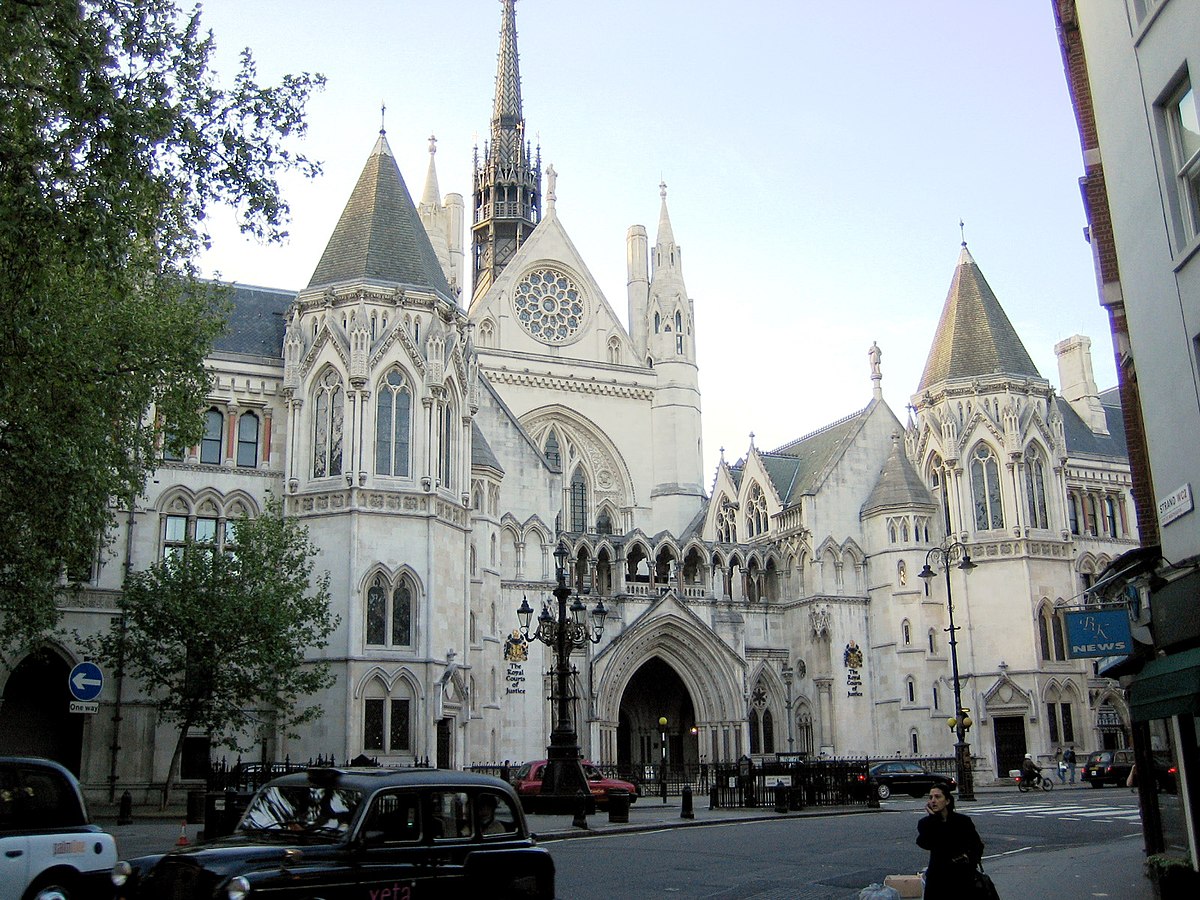
When an Abu Dhabi Royal sues in England: Sheikh Tahnoon Bin Saeed Bin Shakhboot Al Nehayan v Kent

Royal Courts of Justice
Author Anthony M
Source Wikipedia
Creative Commons Licence


In the United Kingdom, as in many other countries, the unsuccessful party in civil litigation usually has to contribute substantially to the solicitors and counsel's fees of the successful party. The amount that the unsuccessful party has to pay is known as "costs" in England, Wales and Northern Ireland and "expenses" in Scotland. If there is serious doubt as to whether a claimant could or would pay such costs or expenses the courts if those jurisdictions have power to require him or her to give security (or in Scotland caution) for the costs. That typically takes the form of a deposit of money into an interest bearing account managed by the court but it could be a bank guarantee, insurance bond, escrow fund or other arrangement.

In England and Wales the power to order security for costs is governed by Section II of Part 25 of the Civil Procedure Rules. CPR 25.13 enables the court to make an order for security for costs if:
"(a) it is satisfied, having regard to all the circumstances of the case, that it is just to make such an order; and
(b) (i) one or more of the conditions in paragraph (2) applies, or
(ii) an enactment permits the court to require security for costs."
This is a very powerful weapon for defendants as it can stop a claim in its tracks.  The usual reason for an order is that:
"the claimant is a company or other body (whether incorporated inside or outside Great Britain) and there is reason to believe that it will be unable to pay the defendant’s costs if ordered to do so."
However, there are other grounds one of which is that the claimant is:
"(i) resident out of the jurisdiction; but
(ii) not resident in a Brussels Contracting State, a State bound by the Lugano Convention, a State bound by the 2005 Hague Convention or a Regulation State, as defined in section 1(3) of the Civil Jurisdiction and Judgments Act 1982."
It was on that ground that Mrs Justice Nicola Davies expressed willingness in  Sheikh Tahnoon Bin Saeed Bin Shakhboot Al Nehayan v Kent [2016] EWHC 623 (QB) (21 March 2016) to make a security for costs order (albeit limited in scope) against the sixth in line to the throne of Abu Dhabi who is a very wealthy man.

In this action the claimant claimed £2 million under an agreement with the defendant to invest in an hotel business. His claim form was issued on 8 July 2013 and a request was made for interim security on 10 Jan 2014. That was not provided to the defendant's satisfaction so he applied on 28 July 2015 for security in the sum of £1 million payable as follows:
"i) £400,000 within 35 days of the date of the court's order;
ii) £250,000 by no later than 35 days after the hearing of the restored CMC;
iii) £350,000 by no later than 2 days before the date fixed for the trial in the action."
The defendant's application notice provided for the claim to be struck out and judgment to be given to the defendant if such security was not given.

The defendant submitted that:
  1. He would face serious and substantial difficulties in seeking to enforce any costs award in his favour against the claimant having regard to the claimant's status as a senior member of the ruling family of Abu Dhabi and for position generally with respect to the enforceability in the UAE of judgments of the court of England and Wales.
  2. If the court were to ignore the standing of the claimant and concerns about the judicial system in the UAE, expert evidence before the court demonstrated that a costs order from the courts in England and Wales would not be enforced by the courts in the UAE.
In support of his first submission, the defendant relied on a report on the UAE by the United Nations Special Rapporteur on the Independence of Judges and Lawyers. The rapporteur found that:
"The justice system in the UAE has developed into an elaborate and complex court system in a relatively short time frame. Despite commendable progress and achievements the Special Rapporteur is concerned that the challenges and shortcomings she has identified are serious and negatively affect the delivery of justice, the enjoyment of human rights and the public's confidence in the judiciary. …"
 She found at para [28] of her report that:
"The federal system of the United Arab Emirates is complex and can be difficult to understand, in particular for non nationals, who constitute the majority of the population. During a visit, the Special Rapporteur was told that because of the complex superposition of federal and local laws, it is sometimes difficult for the public to know where the boundaries lie between the federal and local justice systems. There also appears to be a lack of consistency between the applications of federal laws between the Emirates. The Special Rapporteur is concerned about reports that it is difficult for people to know which legal provisions are applicable to them depending on where they are in the Federation, and that laws are sometimes applied in an arbitrary manner, that creates ambiguity and mistrust with both law enforcement authorities and the justice system."
There were also concerns about the independence of the judiciary, the absence of a formal distinction between the judiciary and the executive and particularly that the attorney-general was one of the 7 members of the federal supreme court and 3 others represented the executive.

In support of his second submission, the defendant relied on the evidence of a senior UAE lawyer  that it would be extremely difficulty and expensive to enforce a costs order against the claimant in the UAE.

At para [29] of her judgment, Mrs Justice Nicola Davies found no objectively justified grounds upon which to conclude that this defendant was unlikely to successfully obtain enforcement of a costs judgment against the claimant in the civil or commercial courts of the UAE but she did accept at [30] that the defendant would be likely to have to embark upon a legal process which could be lengthy and thus costly in order to attempt to obtain enforcement of a costs order. She formed the view that those difficulties would be better protected by a security for costs order tailored to the additional costs that the defendant would incur in enforcing a costs order. She made it clear that such an order would be limited in its amount and would not preclude this claimant from pursuing his claim.

As the defendant's application did not include such a claim and as no quantification had been provided, Her Ladyship left it to the parties to state in writing whether they could agree terms and to return for a second hearing if they could not.

An order of the kind proposed by the judge is unusual and would not have been made if the claimant had substantial assets in the United Kingdom. In expressing willingness to make it, she impliedly accepted at least some of the criticisms that had been made of the UAE and Abu Dhabi legal systems by the defendant. No doubt that is one of the reasons why the authorities in Dubai and Abu Dhabi have established special common law jurisdictions in their financial districts (see Jane Lambert Abu Dhabi Global Market - Yet Another Common Law Enclave in the Gulf 22 Feb 2016).

Should anyone wish to discuss this case or any of the issues raised in it he or she should call me on +44 (0)207 404 5252 during office hours or send me a message through my contact form. I should like to thank Mr Abdul Hafeezi of Freeman Harris for bringing this case to my attention.

    Saturday, 19 September 2015

    Pursuing Expatriates in England and Wales


    Oxford Combined Court Centre
    Author Kaishu Tai
    Source Wikipedia
    Creative Commons Licence


    According to such web forums as the Consumer Action Group, Getoutofdebtfree, LegalBeagles and World Law Direct, banks and other financial institutions in Dubai have been chasing returning expatriates in this country for unpaid bank loans, credit card balances and other debts that they are alleged to have incurred in the Emirates. Much of the advice that is posted to those forums is helpful but some of it is not. One or two posts are downright dangerous. Here are some tips for handling such claims.

    1.  Foreign debts can be pursued here

    As a general rule the courts in England and Wales will enforce foreign debts and other causes of action. Those courts will apply the law of the place where the debt or other cause of action occurred.  Thus, if you have borrowed money from a Dubai bank or credit card company the court will construe and enforce the loan or credit card agreement in accordance with UAE and Dubai law rather than that of England and Wales. There are a number of exceptions. For example, the English courts will rarely entertain a claim where the parties have agreed to resolve their dispute in the courts of some other country or by arbitration. However, that would not prevent the English courts from enforcing a foreign judgment or arbitration award.

    2.  Foreign Limitations Periods 

    Every legal system sets a time limit for bringing a claim. That is known as "the limitation period." In England and Wales the limitation period for most other claims is 6 years.  In the United Arab Emirates it is much longer.  Art 473 of the Civil Code provides:
    "A right shall not expire by the passage of time but no claim shall be heard if denied after the lapse of fifteen years without lawful excuse, but having regard to any special provisions relating thereto."
    For many years the English courts applied the English limitation period even if the law of the place where the contract was made provided a different limitation period but our law was changed by the  Foreign Limitation Periods Act 1984. S.1 (1) of that Act provides:
    "Subject to the following provisions of this Act, where in any action or proceedings in a court in England and Wales the law of any other country falls (in accordance with rules of private international law applicable by any such court) to be taken into account in the determination of any matter—
    (a)  the law of that other country relating to limitation shall apply in respect of that matter for the purposes of the action or proceedings subject to section 1A; and
    (b) except where that matter falls within subsection (2) below, the law of England and Wales relating to limitation shall not so apply."
    However, that section is subject to s.2 (1) and (2)  of the Act:
    "(1)   In any case in which the application of section 1 above would to any extent conflict (whether under subsection (2) below or otherwise) with public policy, that section shall not apply to the extent that its application would so conflict.
    (2)   the application of section 1 above in relation to any action or proceedings shall conflict with public policy to the extent that its application would cause undue hardship to a person who is, or might be made, a party to the action or proceedings."
    There have been cases where very short foreign limitation periods have been overridden on the ground that they are contrary to public policy in that they cause undue hardship to the claimant but I have found no case where an exceedingly long limitation period has been overridden by an English court. However, it is at least arguable that s.2 (1) and (2) were inserted to enable the English courts to consider lengthy limitation periods like that of the UAE and to override them if need be. I am aware of at least one recent case where an application for summary judgment by a foreign creditor was dismissed on that ground.

    Try to settle quickly

    Because costs can mount up quickly for all parties the sooner you settle your dispute the better.  The longer you leave it the more expensive settlement will become because you will have to take account of your own and probably the other side's costs.

    Practice Direction - Pre-Action Conduct and Protocols

    Paragraph 3 of the Practice Direction - Pre-Action Conduct and Protocols provides:
    "Before commencing proceedings, the court will expect the parties to have exchanged sufficient information to—
    (a)  understand each other’s position;
    (b)  make decisions about how to proceed;
    (c)  try to settle the issues without proceedings;
    (d)  consider a form of Alternative Dispute Resolution (ADR) to assist with settlement;
    (e) support the efficient management of those proceedings; and
    (f) reduce the costs of resolving the dispute."
    The first step is for the creditor's solicitors to write a letter before claim. It is imperative to acknowledge that letter at once. It is unlikely to be a try on even if it is the first communication you have received from the other side in many years. You then have a very short time in which to seek legal advice in order to answer the letter before claim in full.

    Getting the Right Legal Advice

    Claims by foreign creditors to enforce foreign contracts involve difficult points of foreign as well as English law and not every law firm or barrister has experience of this kind of litigation. Consumer advice services and websites are even less likely to have all the answers. Ask your legal advisor whether he or she has experience of the sort of claim that you are facing and how such previous claims were resolved. Specialist legal advice does not come cheap but it is a lot less expensive than litigation which is likely to result from bad advice or no advice at all. Remember that there are lots of deals that can be done to reduce or spread the cost of legal advice.

    Be prepared for Hard Bargaining

    The other side are likely to be represented by law firms with years of experience of this kind of litigation and they can be expected to drive a very hard bargain. There is nothing personal in this. They are just doing their job. The best way to deal with them is to follow the Practice Direction and seek and follow the best advice that is available to you.

    Further Information

    If you want to discuss this article or any related matter, call me on 020 7404 5252 during office hours or use my contact form.

    Sunday, 28 July 2013

    The UAE's Bilateral Investment Treaties

    A bilateral investment treaty ("BIT") is an agreement between two governments on the terms by which the nationals of each contracting party may invest in the territory of the other.   A typical BIT will oblige each government to accept investments from the nationals of the other, to treat such investments no less favourably than those of its own nationals or those of the investors of any other country, not to expropriate such investments without adequate compensation and to submit any dispute with an investor to arbitration through the International Centre for the Settlement of Investment Disputes ("ICSID").

    BITs have existed for over 40 years but their potency first emerged in a claim by the US waste disposal company Metalclad Insulation Corporation ("Metalclad") against the Mexican government for compensation for the the refusal by the local and state authorities of permission to use a landfill site that Metalclad had acquired near the small town of Guadalcázar, San Luis Potosi for the disposal of toxic waste. Metalclad claimed that the refusal of planning permission amounted to "expropriation" of the landfill site and in their award of 30 Aug 2013 the arbitrators held that the company was right. They ordered the Mexican government to pay Metalclad US$16,685,000. Mexico challenged the award in the courts of British Columbia which was the province in which the arbitrators had sat and won a modest reduction of the damages but the result was seen as a victory for a medium size company against a sovereign government.

    Since Metalclad there has been a spate of claims by private companies against states under BITs and some of these relate to intellectual property.   Legislation by the governments of Uruguay and Australia to discourage smoking by requiring cigarette companies to package cigarettes with graphic warnings in the case of Uruguay and plain packaging in the case of Australia have been challenged by the tobacco giant Philip Morris under Uruguay's BIT with Switzerland and Australia's with Hong Kong for expropriation of the multinational's trade marks in those countries. In the claim against Uruguay the arbitrators have recently decided that they have jurisdiction to entertain the claim (see their decision of 2 July 2013 to that effect).   In the claim against Australia the case is proceeding in the Permanent Court of Arbitration in the Hague. Both sides have instructed counsel, the claimants members of the English Bar and the Australians barristers from Australia (see the notice on the PCA's website and Philip Morris's press release of 21 Nov 2011.

    The latest claim for compensation in respect of intellectual property is Eli Lilly & Co's for C$500 million against the Canadian government for the invalidation by the Canadian courts of two of its Canadian pharmaceutical patents.   Eli Lilly complains that the Canadian courts have developed a doctrine on utility called the "promise doctrine" which exists nowhere else in the world and results in the invalidation of patents that would be allowed elsewhere.  In Eli Lilly's submission such invalidation amounts to expropriation of its patents without adequate compensation and it has served a notice of intent to claim dated 13 June 2013.  I have written a short article on the claim in "Biting Back: Claiming Compensation from Foreign Governments under Bilateral Investment Treaties for Failing to provide Adequate IP Protection" 27 July 2013 as well as a more detailed article that has been accepted for publication in the EIPR.

    In my article for the EIPR I have argued that if the invalidation of Eli Lilly's patents and indeed the refusal of planning permission for the use of Metlclad's landfill site amounts to "expropriation" then so too would the failure by a government to provide adequate intellectual property protection.   In this regard, it is worth remembering that the United Arab Emirates has 24 BITs including agreements with the following brand owing and design and technology exporting states:

    It is of course worth remembering that BITs can work both ways.   The UAE has BITs with newly industrializing countries such as Bangladesh, Malaysia, Turkey and Vietnam where the Emirati interest is likely to be similar to those of investors from developed states. Similarly, Emiratis have substantial investments in stocks and real estate in London and other European capitals to which these BITs apply.

    Should anyone wish to discuss this article, BITs in general or a particular issue call me on +44 (0)20 7404 5252 during office hours London time or fill out my contact form.   You can also follow me on FacebookLinkedin, twitter or Xing.

    Saturday, 8 June 2013

    Dubai Courts


    I have written extensively about the DIFC Courts in this blog ever since I uploaded my article on the DIFC Courts to the JD Supra site on 7 Jan 2011. These are the English speaking common law courts with judges who have held high judicial office in the UK and other Commonwealth countries which administer the commercial and property laws of the Dubai International Financial Centre. Although the jurisdiction of those courts has recently been extended by the ruler's decree of 31 Oct 2011 which I noted in "DIFC Courts Spread their Wings" 7 Dec 2011, it is important to remember that they are not the courts of the United Arab Emirates or even of the Emirate of Dubai.  Dubai, each of the other Emirates and the Federal Government have their own court systems which are quite different.

    The Dubai Courts now have an English language website with a schematic diagram on the organization of those courts and information on their work and services many of which are accessible online. The history of those courts is introduced in almost poetic terms:
    "The judiciary in Dubai has a beautiful story mixed with fragrance of Arab history that reminds us the stories of earlier judges, such as, Justice Ayyadh Ben Moussa Ben Ayyadh, Justice Abdul Aziz Al Jorjani, Juge Abdel Rahman Bin Qudaamah Al Maqhdussy, whom whenever you mention them you would feel a whiff of breeze carrying aroma of history wherein chastity, piety, Godliness and Personal Affairs knowledge originating from the folds of the Book that has been wore out throughout the ages but did not fade its knowledge, jurisprudence, verses and wisdom."
    Though the court system traces its origins to those judges it has developed considerably since the 1970s with the establishment of separate courts of first instance, appeal and cassation. The First Instance Court has general jurisdiction but sits in specialist divisions known respectively as the Civil CourtCommercial CourtPersonal Status CourtCriminal CourtLabour Court and Real Estate Court. Appeals from the First Instance Court lie to the Appeals Court and from there to the Court of Cassation. Many of the services of those courts are available online and may be operated through the website.

    There appears to be considerable co-operation between the Dubai courts and those of the DIFC as is clear from the DIFC Courts' Activities and Business Plan for 2013 to 2015.

    Our chambers will shortly have permanent representation in Dubai through a resident member. In the meantime, I can respond to any enquiries about this article or the DIDC courts generally. You can contact me in London on +44 (0)20 7404 5252 during office hours or through my contact form You can also follow me on Facebook,Linkedin, twitter or Xing.

    Monday, 29 October 2012

    Cybersquatting Emirates Style: the UAE Domain Name Dispute Resolution Policy

    In "Domain Names: New Domain Name Dispute Resolution Policy for ".ae" and "امارات." Top Level Domains" 22 Jan 2011, I outlined the domain name registration system for the United Arab Emirates  country code top level domain name space (".ae" and "امارات.") and its domain name dispute resolution policy (the UAE Dispute Resolution Policy ("UAE DRP"))..

    As I explained in that article, the UAE DRP is modelled on ICANN's Uniform Domain Name Dispute Policy ("UDRP") and managed by the World Intellectual Property Organization ("WIPO") and cases come before the same panellists who decide cases under the UDRP.  WIPO currently has one Emirates resident on its list, namely  Ms. Hoda Barakat of Dubai, but WIPO's policy is to appoint a panellist from a third country where the parties are from different countries.   Only when the parties are from the same country will WIPO appoint a panellist from that country.

    The cases that have been resolved in accordance with the UAE DRP since 2006 are listed on the WIPO UDRP Domain Name Decisions (ccTLD) page of the WIPO website.   As of today there have been 16 decisions and all but 2 have resulted in an order for the transfer of the disputed domain name to the complainant.  The two that have been determined differently - DAE2006-0001 (<morganstanley.ae>) and DAE2008-0002 (<loreal.ae>) - have been "terminated."  Most of those cases have been decided by single panellists but a few have been decided by 3 member panels.

    An index of the decisions appears below:
    One of the areas of law in which these chambers specialize is domain name dispute resolution (see the NIPC Domains website). Should you or your client require advice or representation in a domain name dispute in the ".ae" top level domain or elsewhere we shall be glad to help.  You can call us on +44 161 850 0080 or  send a message through my contact page.  You can also follow me on Facebook, Linkedin, Xing or twitter.

    Thursday, 27 September 2012

    Du Trademark: Trade Mark Law in the UAE


    DuTrademark Group describe themselves as "a group of trademark professionals who network and share there knowledge also exchange business after building a trust between each other". They offer a range of services including searches, advice and representation on trade mark law in Afghanistan and Algeria as well as the United Arab Emirates.

    They have written a very good article on trade mark law in the UAE which discusses the local legislation and practice.

    If you want to discuss this article further, their contact details are:
    Horwath Mak
    International Trademark & Patent Attorneys
    1403, Al Reem Tower,
    Al Maktoum Street,
    Deira,
    P O BOX 82315,
    Dubai,
    UAE.
    Email: info@dutrademark.
    Phone 971 (4) -236-7588 or +971 (4) -236-7589

    Saturday, 11 February 2012

    Copyright and Related Rights in the United Arab Emirates: Part II

    This article continues and concludes my introduction to copyright and related rights in the United Arab Emirates ("UAE"). In Part I I discussed the treaties and conventions to which the UAE is party, the implementing legislation, copyright works and performances, economic and moral rights and the term. In this Part I consider subsistence, licensing and assignment, regulation of collecting societies, infringement and remedies.

    Federal Copyright Copyright Law
    The basic copyright law statute is Federal Law No. (7) of the Year 2002 Concerning Copyrights and Neighbouring Rights ("FL7"). An English translation appears on the WIPO website.

    Subsistence
    Art 2 of FL7 confers upon owners of copyright and neighbouring rights the protection of this law against an aggression against their rights. Art 4 establishes a system for the registration and deposit of copyright works.According to the WIPO website, the copyright office for the UAE is the Ministry of Publishing and Copyright Department, P.O. Box 901, Abu Dhabi Tel +971 506 162 120, Fax +971 262 62 867. The Director of the authority is Fawzi Abdel Aziz Algabri.

    Transfer of Rights
    Subject to art 15, art 9 of FL7 permits a copyright owner to transfer all or part of his economic rights provided that he does so in writing and specifies the right, purpose, duration and place of exploitation.  Art 10 permits such transfer to be in consideration of money or moneysworth provided that the fairness of the transfer may later be reviewed by the courts under art 11. Art 15 prohibits the alienation of all or more than 5 prospective works.

    Compulsory Licensing
    Art 21 of FL7 permits any person to apply to the Ministry of Information and Culture for a compulsory licence for the translation or reproduction of a copyright work. The Ministry sets the terms of such licence.

    Exceptions to Copyright
    Copyright is not infringed by any of the following acts:

    • making a single copy of a copyright work (other than a work of fine or applied art, work of architecture of computer program except as otherwise provided) for personal and non-commercial or professional but personal use of the copier under art 22 (1);
    • making a single copy of a computer program for back-up purposes by a licensed user for so long as the licence subsists under art 22 (2);
    • use in judicial proceedings under art 22 (3);
    • making a single copy subject to acknowledgements for the purpose of preserving the original or research or private study if not otherwise licensed under art 22 (4);
    • quotation of short passages for the purposes of criticism, discussion or review provided that the extract is accompanied by a proper acknowledgement under art 22 (5);
    • performing a work in private to a domestic or academic audience without remuneration under art 22 (6);
    • including publicly available fine arts, applied or plastic works of art or works of architecture in a broadcast under art 22 (7); and
    • reproduction of extracts from written works, sound recordings or audio-visual performances for cultural, educational, religious or vocational training provided that no more is taken than is reasonably necessary for the purpose, the author is mentioned, no profit is intended and it is not possible to obtain a licence by other means under art 22 (8).
    Art 23 permits newspapers, periodicals and broadcasters to copy excepts from published works and speeches for reporting news and current affairs upon the conditions specified in the article.

    Regulation of Collecting Societies
    Collecting societies have to be licensed annually by the Minister of Information and Culture pursuant to art 32 of FL7.They are required to keep records of their members and finances which may be inspected by the Ministry. Licences may be withdrawn at any time.

    Remedies
    Copyright infringement is an offence punishable by fine or imprisonment under art 37 of FL7.  Allegedly infringing copies of copyright works may be impounded by customs under art 36.  There is also a right of pre-emptive seizure under art 34 provided that proceedings are instituted within 15 days (art 34 (6) FL7).

    Further Information
    Should anybody wish to discuss this topic further, he or she can call me on +44 161 850 0080 or fill in my contact form. He or she can also contact me through FacebookLinkedinXing or twitter.  

    Wednesday, 4 January 2012

    Copyright and Related Rights in the United Arab Emirates: Part I

    Because of the complexity of the topic I shall discuss it in two separate articles.   In this article I shall deal with the Treaties and Conventions to which the United Arab Emirates ("UAE") is party, the applicable domestic legislation, the works that are protected, economic and moral rights and the term of subsistence of these rights.  In Part II I shall discuss exceptions to copyright and rights in performances, collecting societies, infringement and remedies.


    International Agreements
    The UAE was one of the first members of the World Trade Organization and is party to the Berne Convention, the WIPO Copyright Treaty, the Rome Convention and the WIPO Performers and Phonograms Treaty. Those conventions and treaties require the UAE to protect the works of art and literature of its nationals and those of nationals of other contracting parties.

    Implementing Legislation
    The legislation that implements the UAE's obligations under those instruments is Federal Law No. 7 of the Year 2002 Concerning Copyrights and Neighbouring Rights ("FL7").   It is available in Arabic and English on the WIPO Collection of Laws for Electronic Access.  FL7 was issued on 1 July 2002 by the President of the Union with the consent of the Council of Ministers and the Principal of the Supreme Council of the Union.

    Overview
    FL7 codifies the law of copyright and rights in performances. Compared to the Copyright, Designs and Patents Act 1988 of the United Kingdom it is a very short instrument consisting of 50 articles in 8 sections over 16 pages including contents and recitals.

    Copyright Works
    Art 2 of FL7 lists the following:

    1. Books, pamphlets, essays and other written works;
    2. Computer programs and applications, databases and analogous works;
    3. Lectures, addresses, sermons and other works of similar nature;
    4. Dramatic works and mine,
    5. Musical compositions with or without words,
    6. Sound and audiovisual works,
    7. Architectural works, engineering plans and layouts,
    8. Drawings, paintings, sculptures, lithographs, engravings and similar works,
    9. Photographic and analogous works,
    10. Works of applied and plastic art,
    11. Illustrations, geographical maps, sketches, three-dimensional works relative to geography, topography and architecture (art 2).

    Copyright does not extend to Ideas
    Art 3 makes clear that "protection does not extend to mere ideas, procedures, methods of work, mathematical understandings, principles, and abstract facts, but extend to creative expression in any of them."

    Exceptions
    Art 3 also provides that protection does not extend to:
    (1) official documents such as laws, regulations, decisions, international agreements, judgments, arbitrators’ awards and the decisions of the administrative committees having judicial competence;
    (2) news, events and the current affairs which constitute merely media news, or
    (3) works in the public domain.
    However, copyright can subsist in compilations of such materials.

    Authors' Economic Rights
    Art 7 reserves to the author (or persons deriving title through the author) the right to exploit the work by any means including copying, "electronic loading or storing, acting a play by any means, broadcasting, re-broadcasting, transmission, performance, public communication, translation, modification, alteration, rental, lending or publication by any means including provision of publication through computers or information nets or communication nets or other means." These rights can be assigned, licensed or seized by creditors in contrast to moral rights which are inalienable.


    Authors' Moral Rights
    Art 5 confers the following moral rights upon an author:
    "1. The right to determine first publication of the work;
    2. The right of writing the work in his name;
    3. The right to protest against alteration of the work if the alteration leads to distortion,
    mutation or causing derogation to the author.
    4. The right to withdraw his work from circulation in case of serious reasons justifying
    such an act."
    Rights in Performances
    Section 3 of FL7 confers economic rights on performers, "producers of phonograms" and broadcasters.   In addition, performers enjoy moral rights in their performances.

    Performers
    Performers are defined in art 1 of FL7 as:
    "The actors, singers, musicians, dancers and other persons who recite, chant, play or perform by any way literary or artistic works or others protected according to the provisions of this law or inclusive within the public property."
    Art 17 confers the following economic rights on performers
    "1. The right to transmit their unfixed performance and communicating it to the public.
    2. The right to fix their performance on a phonogram.
    3. The right to reproduce their fixed performance on a phonogram."
    Their moral rights are as follows:
    "(i) The right of having the performance in their names whether live or recorded.
    (ii) The right to suspend any distortion, mutilation, modification or derogation action, which would be prejudicial to their status."
    Producers of Phonograms
    A phonogram is defined by art 1 as "any fixation of certain performed sounds addressing the hearing irrespective of the mode of fixation or the used device." The definition also includes "sounds fixation with picture in order to prepare audiovisual work unless agreed otherwise." A "producer of a phonogram" is defined by the same article as "the natural or legal person who records for the first time sounds of a performer or other sounds."

    Art 18 confers the following rights upon producers of phonograms:
    "1. The right to prohibit any exploitation of their phonograms by any means without their authorization. Copying, rental, broadcasting, re-broadcasting, availability to the public via computer or other media is an exploitation prohibited to be used by third parties.
    2. The right to disseminate their recordings via wire, wireless, computer or other means."
    Broadcasters
    Art 19 confers the following rights upon broadcasters:

    1. The right to grant licenses for exploitation of their recordings and broadcasting programmes.
    2. The right to prohibit any communication of their programmes or recordings to the public without their authorization. Recording of such programmes, copying or re-copying their recordings, rental, re-broadcasting, and communication to the public by any means are prohibited to the third parties in particular.

    Term
    Copyright subsists for the following terms in respect of the following categories of rights:
    • Authors' Economic Rights: the life of the author or in the case of a joint work the life of the last surviving author plus 50 years (art 20 (1) and (2));
    • Economic Rights in Applied Arts: 25 years from first publication (art 20 (5));
    • Economic Rights of Performers: 50 years from the beginning of the calendar year after the performance (art 20 (7));
    • Economic Rights of Producers of Phonograms: 50 years from the beginning of the calendar year after the publication of the phonogram (art 20 (8)); 
    • Economic Rights of Broadcasters: 20 years fro the beginning of the year of first transmission (art 20 (9)).
    Further Information
    Should anybody wish to discuss this topic further, he or she can call me on +44 161 850 0080 or fill in my contact form. He or she can also contact me through FacebookLinkedinXing or twitter.
    Modified 11 Feb 2012