Friday, 8 July 2011

IP News Round Up

The Gulf Co-operation Council Patent Office ("GCCPO") which I mentioned on 20 Jan 2011 has recently launched a new website . It offers information on filing, searching, published applications and statistics. So far it is available only in Arabic but English speakers can still access the old English language site. For general background information on the Gulf Co-operation Council ("GCC") see my article "Gulf Co-operation Council Constitutional Framework" which I uploaded on 10 June 2011.

Joelle Morini published an article entitled "Where to find Patent Documents from the Patent Co-operation Council"in the Intellogist blog on 24 May 2011. It provides a useful introduction to the GCC and the GCCPO, provides examples of GCC patent specifications and lists the databases where GCC patents are to be found. Her article also refers to my post on Saudi Arabian IP law.

The International Bar Association will hold its annual conference in Dubai between 30 Oct and 4 Nov 2011. The advance programme promises interesting discussions on intellectual property, communications and technology. Particularly intriguing is "No more secrets and the right to oblivion? The consequences of ubiquitous computing" which is an all day event on the Wednesday.

Tuesday, 28 June 2011

Qatar Financial Centre: Civil and Commercial Court Regulations

On 15 Dec 2010 the Council of Ministers of Qatar adopted Regulations and Procedural Rules ("the Regulations") for the Qatar Financial Centre Civil and Commercial Court. These repeal the Practice Guide issued by Lord Woolf, the Court's President, on 25 April 2009. They are intended to be a self-contained code for the administration of justice by the Court (art 2.3 of the Regulations). They can be amended only with the approval of the Council of Ministers but they can be supplemented by practice directions and practice guides issued by the Court.The Regulations are divided into 37 articles.

The QFC Civil and Commercial Court
I discussed the Qatar Financial Centre ("QFC"), its constitution, legislation and its Civil and Commercial Court in my article "Qatar Financial Centre" on 3 April 2011. In that article I described that court as "distinct and separate from, and independent of, all other Qatari courts." Unless the rest of the Qatari legal system the QFC Civil and Commercial Court is a common law court. Most of its judges come from common law jurisdictions. Though parties have the right to use Arabic, English is the language in which proceedings are usually conducted.

Jurisdiction
Art 8.3 (c) of the QFC Law confers jurisdiction on the Court to hear the following disputes:
  • Civil and commercial disputes arising from transactions, contracts, arrangements or incidences taking place in or from the QFC between the entities established therein.
  • Civil and commercial disputes arising between The QFC authorities or institutions and the entities established therein.
  • Civil and commercial disputes arising between entities established in The QFC and contractors therewith and employees thereof, unless the parties agree otherwise.
  • Civil and commercial disputes arising from transactions, contracts or arrangements taking place between entities established within The QFC and residents of The State, or entities established in the State but outside The QFC, unless the parties agree otherwise.
Art 9.2 of the Regulations enables the Court to take account of any choice of law clause giving the Court jurisdiction. Art 9.3 enables it to entertain any matter in respect of which the QFC Law or Regulations grant it jurisdiction.

Overriding Objective
Like the Civil Procedure Rules ("CPR") there is an overriding objective to which the Court must give effect when exercising its functions and powers (art 4.1 and 4.2). Art 4.1 provides that the overriding objective is to deal with all cases justly. "Dealing with cases justly" includes so far as practicable:
  • ensuring that litigation before the Court takes place expeditiously and effectively using appropriately of the Court and of the parties than is necessary;
  • ensuring that the parties are on an equal footing;
  • dealing with cases in ways which are proportionate to the amount of money involved, to the importance of the case, to the complexity of the issues, facts and arguments, and to the financial position of each party; and
  • making appropriate use of information technology.
As in England it is the duty of the court to deal with all cases in accordance with the overriding objective (art 4.4) and of the parties to assist the Court to do that (art 4.5).

ADR and Arbitration
The Court is required by art 5.1 to encourage parties whenever it is appropriate to do so to encourage parties to resolve disputes by arbitration, mediation or other alternative method of ADR. It may actually require parties to settle their dispute by ADR (art 10.2.2 of the Regulations). It has power under art 25.1 to stay proceedings for mediation or other ADR and it may offer such other assistance as the parties may require to resolve their dispute in this way under art 25.2. Finally, the Court may recommend the establishment of a dispute resolution centre pursuant to art 9 of the QFC Law.

The Registry
Art 7.1 of the Regulations require the President to appoint a Registrar and to cause a Registry to be established. The Registry is responsible for the management of the Court and also for case management including the filing of documents under art 8.

Commencing Proceedings
Proceedings are commenced by the issue of a claim form (art 17.1). A claim form is issued by the Registry between 07:00 and 14:00 on any day except a Friday, Saturday or public holiday (art 17.2 and art 14.2). The claim form must include:
  • the names, postal and email addresses, telephone and fax numbers of the parties;
  • the nature of the dispute setting out the facts relied upon and attaching relevant documents;
  • the basis on which it is alleged that the court has jurisdiction;
  • the legal basis of the claim including any legislation relied upon, and
  • the remedy requested.
The claim form must be verified by a statement of truth (art 16.1). The claim form must be served by the claimant and not by the court (art 18.1). Claims may be served abroad without the permission of the Court provided that local rules for service are complied with (art 18.3).

Responding to a Claim
Unless he or she applies to challenge the jurisdiction of the Court within 14 days of service of the claim form under art 19.1 of the Regulations, a defendant must file a defence within 28 days (art 20.1).

Case Management
The Court has power under art. 10.1 to take all steps that are necessary or expedient for the proper determination of a case. That includes
  • such orders as it considers expedient in relation to the management of cases;
  • requiring the parties to settle their dispute by ADR;
  • admitting evidence of fact or expert evidence on such terms as it considers appropriate;
  • receiving evidence on oath or affirmation;
  • ordering disclosure; and
  • awarding costs.
Procedural directions may be given by a Judge or the Registrar (art 15.4).

Hearings
Hearings and appeals are conducted by panels of three judges (art 12.2) which may delegate one of their number to hear an issue or application whenever it is considered to be in the interests of justice and good administration (art 12.5).

Remedies
Art 10.3 confers power on the Court to grant all such relief and make all such orders as may be appropriate and just in accordance with the overriding objective. That includes:
  • an order that a party pay a sum of money;
  • damages (including damages in lieu of an injunction);
  • prohibitory and mandatory injunctions;
  • specific performance;
  • declarations;
  • restitution;
  • disgorgement of profits;
  • an account; and
  • an order for the payment of interest.
The Court has power to fine those who fail to comply with or disobey its orders under art 34.3.1 but it does not appear to have any power to commit though it can refer such contravention to the competent agency or authority of the state pursuant to art 34.3.3.

Appeals
Although a decision at first instance is usually final there is a right of appeal to a panel of three justices on the grounds of error of law where there is a risk of serious injustice under art 35.1.

Further Information
Should any party wish to discuss this article further, he or she should get in touch with me through my contact form.

Friday, 10 June 2011

Gulf Cooperation Council Constitutional Framework

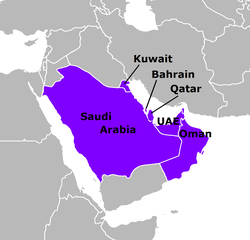
In my article Patents: Gulf Co-operation Council of 20 Jan 2011, I discussed the objectives of the Gulf Cooperation Council ("GCC") and mentioned the GCC's Patent Office ("GCCPO") and Patent Regulation. In this article I explore the constitutional framework of the GCC.

Constitution
The official name of the GCC is the Cooperation Council for the Arab States of the Gulf. It was established by the governments of Bahrain, Kuwait, Oman, Qatar, Saudi Arabia and the United Arab Emirates on 25 May 1981. The instrument establishing the GCC is called The Charter. The objectives of the GCC mentioned in my previous article are set out in art. 4 of the Charter.

The Institutions
Art 6 of the Charter establishes the following institutions:
  • a Supreme Council with a Commission for the Settlement of Disputes attached;
  • a Ministerial Council; and
  • a Secretariat General.
Supreme Council
Art 7 declares that the Supreme Council is the highest authority of the GCC. It consists of the heads of state of the member states with a rotating presidency. This body meets at least once a year though extraordinary meetings can be convened at the request of any two members. Art 8 lists the Supreme Council's functions as follows:
  • to review matters of interest to the member states;
  • to lay down the higher policy for the GCC and the basic lines it should follow;
  • to review the recommendations, reports, studies and joint ventures submitted by the Ministerial Council for approval;
  • to review reports and studies, which the Secretary-General is charged to prepare;
  • to approve the bases for dealing with other states and international organizations;
  • to approve the rules of procedure of the Commission for the Settlement of Disputes and nominate its members;
  • to appoint the Secretary-General;
  • to amend the Charter;
  • to approve the Supreme Council's internal rules of procedure; and
  • to approve the budget of the Secretariat General.
Each member state has one vote. Resolutions on substantive matters require the unanimous vote of all the member states while resolution on procedural matters may be carried by a simple majority (art 9). The Supreme Council is quorate if two thirds of the member states are present (art 7).

Commission for the Settlement of Disputes
Art 10 provides for a Commission for the Settlement of Disputes to be attached to the Supreme Council. The Supreme Council establishes the composition of the Commission on an ad hoc basis whenever a dispute arises. The Commission reports to the Supreme Council which takes such action upon the Commission's advice or recommendations as it thinks appropriate.

Ministerial Council
The Ministerial Council consists of the foreign ministers of each of the member states (art 11). It meets at least once a quarter and is chaired by the foreign minister of the member state that chairs the Supreme Council for the time being. The Council's functions, which are listed in art 12, are as follows:
  • to propose policies, prepare recommendations, studies and projects aimed at developing cooperation and coordination between member states in various fields and adopt the resolutions or recommendations required in this regard;
  • to endeavour to encourage, develop and coordinate activities existing between member states in all fields;
  • to refer resolutions adopted in such matters to the Ministerial Council with recommendations to the Supreme Council;
  • to submit Council for further submission, with recommendations to the Supreme Council for appropriate action;
  • to submit recommendations to the Ministers concerned to formulate policies whereby the GCC's resolutions may be put into effect;
  • to encourage means of cooperation and coordination between the various private sector activities, develop existing cooperation between the member states' chambers of commerce and industry, and encourage the movement within the GCC of workers who are citizens of the member states.
  • to refer any of the various aspects of cooperation to one or more technical or specialized committees for study and presentation of appropriate recommendations;
  • to review proposals related to amendments to the Charter and submit appropriate recommendations to the Supreme Council;
  • to approve rules of procedure of both the Ministerial Council and the Secretariat General;
  • to appoint assistant Secretaries-General, as nominated by the Secretary-General, for a renewable periods of 3 years;
  • to approve periodic reports as well as internal rules and regulations relating to administrative and financial affairs proposed by the Secretary-General, and submit recommendations to the Supreme Council for approval of the budget of the Secretariat General;
  • to make arrangements for meetings of the Supreme Council and prepare its agenda; and
  • to review matters referred to it by the Supreme Council.
Secretariat General
Art 14 provides for a Secretariat General consisting of a Secretary General and a number of assistants charged with:
  • preparing studies related to cooperation and coordination, and to integrated plans and programmes for action by member states;
  • preparing periodic reports on the work of the GCC;
  • following up the implementation by the member states of the resolutions and recommendations of the Supreme Council and Ministerial Council;
  • preparing reports and studies requested by the Supreme Council and Ministerial Council;
  • preparing the draft of administrative and financial regulations commensurate with the growth of the GCC and its expanding responsibilities;
  • preparing the budgets and closing accounts of the GCC;
  • making preparations for meetings and preparing agendas and draft resolutions for the Ministerial Council;
  • recommending to the Chairman of the Ministerial Council the convening of an extraordinary session of the Council when necessary; and
  • any other tasks entrusted to it by the Supreme Council or Ministerial Council.
The current Secretary General is Abdullatif bin Rashid Al-Zayani of Bahrain who assumed office on 1 April 2011 (see the news report of 31 Match 2011 by the Bahrain News Agency for the announcement of his appointment and his curriculum vitae).

Related Articles
GCC Secretariat General "The Organizational Structure"

Sunday, 22 May 2011

Saudi Arabia: Overview of Intellectual Property Law


Saudi Arabia has been party to the Berne Copyright and Paris Industrial Property Conventions since the 11 March 2004 and a member of the World Trade Organization since 11 December 2005.

Its basic intellectual property statutes are:
Unofficial translations of these statutes and other legislation are to be found on the Saudi Arabia resources page of the WIPO website.

There is no intellectual property office as such. Patents, industrial designs, chip topographies and plant varieties are registered by the The King Abdulaziz City for Science and Technology ("KACST") which is also the Saudi Arabian national science agency, national laboratory and internet authority for the .sa country code top level domain. Trade Marks are registered by a department of the Ministry of Commerce known as the Trademarks Register while copyright and related rights are the responsibility of the Ministry of Culture.

According to the statistics page of the KACST website, there were 931 patent and 493 industrial design applications in 2010 and 262 patents and 412 design registrations were granted in that year.

Further information on Saudi Arabian intellectual property law can be obtained from Jane Lambert

Thursday, 12 May 2011

Dubai: Consultation on Proposals to amend the Rules of the DIFC Court

As I said in my introduction to the DIFC Court, the Dubai International Financial Centre ("DIFC") has its own court. This is a special common law jurisdiction with its own legislation. I have already discussed the Centre's laws of confidence and passing off in this blog.

The Rules of the DIFC Court ("RDC") appear to be based on our Civil Procedure Rules ("CPR"). They share, for example, the same overriding objective and terminology. For instance, claims are brought by claimants and not by plaintiffs.

On 20 April 2011 proposed a number of amendments to the RDC following extensive discussions with the Rules Sub-Committee of the Court Users Committee. Details of the proposed rule changes can be viewed here. Many of these proposed changes will facilitate electronic filing of court documents.

The consultation ends on 23 May 2011. Responses should be emailed to consultation@difccourts.ae

Thursday, 7 April 2011

The DIFC Law of Passing Off

In my article on the DIFC law of confidence of 27 Jan 2011 I wrote:
"The DIFC (Dubai International Financial Centre) is like a little bit of London in the Gulf. Covering an area of 45 hectares - slightly smaller than Kensington Gardens - it is a free zone for the banking, insurance, trading and other financial services industries with its own legal system. As I said in my article on The DIFC Courts, the interesting attribute of this legal system is that the laws are in English and its courts apply the common law."
The law of confidence is one of two areas of intellectual property law for which there is legislation in the DIFC. The other area is the law of passing off. Both derive from the same source, namely the Law of Obligations.

Art 38 (1) of that law provides:
"A defendant is liable to a claimant if:
(a) the claimant's goods, services or business have acquired a goodwill or reputation in the market and are known by some distinguishing feature;
(b) the defendant makes a misrepresentation which confuses or deceives persons in relation to the goods, services or business of the claimant, or is likely to do so; and
(c) the claimant suffers or is likely to suffer damage as a result of that belief."
Art 40 (1) gives "misrepresentation" the same meaning as in contract law save that a statement made without regard for its truthfulness which is in fact untrue and which induces the representee to enter into a contract, whether or not that was the intention of the representor, shall be a misrepresentation for these purposes. Instances of confusion or deception include the reasonable belief that
(a) the defendant's goods, services or business are the goods, services or business of the claimant, or vice versa;
(b) the claimant's goods or services of one class, quality, condition or state are of another class, quality, condition or state;
(c) the defendant's goods or services belong to a class of goods or services with a discrete reputation, when they do not; and
(d) goods are covered by the claimant's guarantee when they are not so covered.
Art 38 is clearly derived from the Lord Oliver's speech in Reckitt and Colman Products Ltd v Borden Inc and Others [1990] 1 WLR 491, [1990] 1 All ER 873, [1990] UKHL 12, [1990] RPC 341:
"The law of passing off can be summarised in one short general proposition - no man may pass off his goods as those of another. More specifically, it may be expressed in terms of the elements which the plaintiff in such an action has to prove in order to succeed. These are three in number. First, he must establish a goodwill or reputation attached to the goods or services which he supplies in the mind of the purchasing public by association with the identifying "get-up" (whether it consists simply of a brand name or a trade description, or the individual features of labelling or packaging) under which his particular goods or services are offered to the public, such that the get-up is recognised by the public as distinctive specifically of the plaintiff's goods or services. Secondly, he must demonstrate a misrepresentation by the defendant to the public (whether or not intentional) leading or likely to lead the public to believe that goods or services offered by him are the goods or services of the plaintiff. Whether the public is aware of the plaintiff's identity as the manufacturer or supplier of the goods or services is immaterial, as long as they are identified with a particular source which is in fact the plaintiff. For example, if the public is accustomed to rely upon a particular brand name in purchasing goods of a particular description, it matters not at all that there is little or no public awareness of the identity of the proprietor of the brand name. Thirdly, he must demonstrate that he suffers or, in a quia timet action, that he is likely to suffer damage by reason of the erroneous belief engendered by the defendant's misrepresentation that the source of the defendant's goods or services is the same as the source of those offered by the plaintiff."
Art 38 (2) adds that it is not necessary for the purpose of art 38 that the persons confused or deceived should be aware of the claimant's identity, provided that they are accustomed to the claimant's goods, services or business. It is spelt out in art 38 (3) that it is no defence that the defendant did not intend to cause deception or confusion. A defendant is liable under art 39 if he knowingly assists or facilitates passing off by another person.

Sunday, 3 April 2011

Qatar Financial Centre

Like Dubai, Qatar has established a financial centre with its own legal system which is called the Qatar Financial Centre ("QFC"). The Centre has its own constitution, primary and secondary legislation and institutions including a Civil and Commercial Court that is distinct and separate from, and independent of, all other Qatari courts.

The QFC Constitution
The CFC is established by Law No. 7 of 2005 ("the QFC Law") which was signed by the Emir of Qatar on 9 March 2005 and came into force on 1 May of that year. Art 2 (1) of the QFC Law provides for a business and financial centre to be located initially in Doha. It is possible under art 2 (3) for businesses located elsewhere in Qatar to be treated as though they were operating in the Centre provided that they undertake to relocate to the Centre. Art 3 (1) provides for the QFC to be governed by a QFC Authority consisting of a Board chaired by the Minister of Economics and Finance of Qatar and up to 9 other members appointed by the Council of Ministers. The Board's duties include laying down general policies and plans for the centre (para 5.1 of Sched 1 to the QFC Law) and proposing legislation to the Minister (para 5.2). Art 8 establishes a regulatory authority, regulatory tribunal and Civil and Commercial Court. The Minister has power under art 9 to enact primary legislation known as "regulations" for the QFC within the scope of Schedule 2 which includes intellectual property (para 10 of Sched 2).

Legislation
So far the Minister has made regulations for arbitration, companies, contracts, data protection, employment, financial services, immigration, partnerships, tax and trusts. Some of those regulations provide for the QFC Authority to make secondary legislation known as "Rules". Art 21 (1) of the Data Protection Regulations 2005. for example, enables the QFC Authority to make rules in respect of any matter relating to the processing of personal data and data controllers. Accordingly, the Authority has made the Data Protection Rules which cover the processing of sensitive data, transfers of data out of the QFC, notification and claims to the Regulatory Authority for relief for alleged breaches of the Data Protection Regulations.

The Civil and Commercial Court
Para 1 of Sched 6 of the QFC Law provides for the Civil and Commercial Court to be governed by a Chairman and a number of other legally qualified members none of whom may be members of the Board. None of those members may sit on the Board, regulatory authority or any other QFC institution. Para 8 of that Schedule provides for the Court to have original and appellate jurisdiction for which purpose it sits in First and Appellate Circuits.

Judiciary
The President of the QFC Civil and Commercial Court is Lord Woolf . the former Master of the Rolls. Other judges include Lord Cullen, Lord Scott, Sir Philip Otton, Sir Peter Gibson and Barbara Dohmann QC. There are also judges form other jurisdictions and academia.

Case Law
Judgments of the Court are published on the QFC website. Particularly interesting is the recent decision of the Court in Re Al Mal Bank LLC, Omara and Another v Al Mal Bank LLC where it considers its jurisdiction to make freezing orders in a company insolvency in the absence of a rule book.

Further Information
Any member of the Bar of England and Wales or of any other jurisdiction may appear before the QFC Court. There is already a set of chambers in Qatar though none of its members claims expertise in intellectual property. Should anybody wish to discuss this article further he or she can get in touch through my contact form.