Showing posts with label costs. Show all posts

Tuesday, 21 July 2020

PRS v Qatar Airways - Is London the appropriate forum for a claim against a Qatari state owned corporation for the alleged infringement of many countries' copyright laws?

By Sunnya343 - Own work, CC BY-SA 3.0,
https://commons.wikimedia.org/w/index.php?curid=34010373


Jane Lambert

In  Copyright - Performing Right Society v Qatar Airways Group 20 July 2020 NIPC Law, I discussed the decision of Mr Justice Birss, a judge of the High Court of Justice of England and Wales, in Performing Right Society Ltd v Qatar Airways Group QCS [2020] EWHC 1872 (Ch) (17 July 2020).  That was an unsuccessful application by the national flag carrier of Qatar to stay a copyright infringement action against it by the Performing Right Society ("PRS"),  a United Kingdom collecting society.  The airline had argued that appropriate forum for the proceedings was Doha rather than London.

The PRS alleged that the airline's inflight entertainment system infringed the copyrights in its members' music on every flight from the moment its aircraft picked up passengers to the opening of the cabin doors at the destination.  Copyright is granted by national authorities and applies to national territories.  Nearly every country in the world has its own copyright laws.   Qatar's is Law No. 7 of 2002 on the Protection of Copyright and Neighboring Rights which I mentioned in Qatar Intellectual Property Law on 1 May 2012.

The PRS contend that that Law applies when an aeroplane is parked at Doha Hamad Airport and continues to apply while it remains in Qatari airspace.  However, the moment that it crosses the border of another country the copyright laws of that country applies for as long as the aircraft remains in its territory.   For instance, if a flight is bound for Manchester the Copyright, Designs and Patents Act 1988 would apply as the aeroplane approaches the North Sea coast.  The Act would continue to apply while the aeroplane is on the ground at Ringway.   Indeed it would continue to apply until the aircraft clears United Kingdom airspace on its next flight.

In the action that the PRS has brought against Qatar Airways, the collecting society has claimed relief not just for alleged infringements of the Copyright, Designs and Patents Act 1988 for flights to and from the United Kingdom but also for alleged infringements of Law No 7 of 2002 while the Qatari aircraft are on the ground in Doha, in Qatari or international airspace, infringements of the copyright laws of the territories the Qatari aircraft cross and also infringements of the laws of those aircrafts' ultimate destinations.

Now, most of the journeys made by Qatar Airways neither start nor end in the United Kingdom and go nowhere near it.  QR 0908, for example, is scheduled to take off from Doha Hamad International Airport at 23:35 local time tomorrow evening and land at Kingsford Smith Airport in Sydney at 20:25 the next day.  The PRS claims relief for alleged infringements of Qatari and Australian copyright law in the English proceedings.

How could that be possible?   The answer is that in Lucasfilm Ltd and others v Ainsworth and Another  [2011] 4 All ER 817, [2012] 1 AC 208, [2012] 1 All ER (Comm) 1011, [2011] 3 WLR 487, [2011] FSR 41, [2011] UKSC 39, [2012] EMLR 3, [2011] ECDR 21, [2011] Bus LR 1211, the Supreme Court of the United Kindom decided that the courts of England and Wales can have jurisdiction over claims for infringement of foreign copyrights by actions that take place outside the UK so long as the alleged infringer is within their jurisdiction.

The fact that an English court can decide whether a foreign copyright has been infringed and award damages or other relief if it decides that the copyright has been infringed, does not mean that it should decide such issues.   The exercise of that jurisdiction is subject to an important doctrine called "forum non conveniens".    If it is more appropriate for a court in another country to try the action, the English court should stay (that is to say, stop) all further proceedings in England and allow the parties to resolve their dispute in that other court.


Qatar Airways tried to invoke the forum non conveniens doctrine in the proceedings before Mr Justice Birss.   In order to succeed, a defendant has to satisfy the English court that there is another forum which is clearly and distinctly the natural forum, that is to say, the "forum with which the action has the most real and substantial connection".   Now the court has to look at the issue of convenience not just from the point of view of the defendant but also from the point of view of the claimant.   In his judgment, Mr Justice Birss considered the following factors:

"i) the personal connections the parties have to the countries in question;
ii) factual connections which the events relevant to the claim have with the countries;
iii) applicable law;
iv) factors affecting convenience or expense such as the location of witnesses or documents."

On the first point, England was obviously likely to be more convenient for the claimant than Qatar as it is an English company and Qatar more convenient for the defendant but the defendant flew frequently to and from the UK and had plenty of interests here.   As to the factual connections, the defendant's aircraft flew everywhere so the alleged infringements will have taken place everywhere.  Issues on the applicable laws included such matters as language, the costs that could be recovered and each country's rules on conflicts of laws.  On a number of issues, the practice of the English courts was compared to the practice of the courts of Qatar. The claimant's witnesses were in England whereas the defendant's were in Qatar.  There would have to be a lot of translation wherever the case was held.   The judge took all these matters into consideration and concluded that the defendant had not shown that Doha was more appropriate than London.

Factors that the judge appears to have taken into account were that Qatar us a civil law and not a common law jurisdiction, proceedings would take place in Arabic and not English, costs awards in Qatar tend to be much lower than in England, it is not clear whether, and if so how, the Qatari courts would apply foreign copyright law and there are no specialist intellectual property courts in Qatar.  As I mentioned in my article yesterday, there is another court in Qatar where none of those objections would apply.  The Qatar International Court is an English speaking common law court with judges from the UK and other common law jurisdictions. Its President is Lord Thomas of Cwmgiedd.  Its conflict rules are modelled on those of England and Wales.  It awards costs on the same scale and upon similar principles as the courts in London.   There is no mention of the Qatar International Court in the judgment and the airline does not appear to have suggested it as an appropriate forum.  Whether it would have made the difference to Mr Justice Birss's judgment will never be known but it is certainly worth consideration should there be any other similar case involving Qatar or indeed Abu Dhabi, Dubai or Kazakhstan which also have English speaking common law courts.

Anyone wishing to discuss this topic may call my clerk on +44(0)7986 948267 or send me a message through my contact page while this emergency continues, I shall gladly respond by phone, VoIP or email.

Thursday, 20 April 2017

DIFC Small Claims Tribunal


Standard YouTube Licence


Jane Lambert

The Dubai International Financial Centre ("DIFC") has its own legislation modelled on United Kingdom statutes or codifications of principles of English common law. Those laws are administered by special English speaking courts known as the DIFC Courts. I discussed the jurisdiction in DIFC Courts 7 Jan 2011 JD Supra.

The DIFC courts consist of a Court of Appeal, Court of First Instance and a Small Claims Tribunal ("SCT"). The jurisdiction of the SCT has been extended by the DIFC Courts Rules of Court Order No. 1 of 2015 In Respect of the Jurisdiction of the Small Claims Tribunal of the DIFC Courts. Part 53.2 of the Rules of the DIFC Courts ("RDC") provides that:
"The SCT will hear and determine claims within the jurisdiction of the DIFC Courts:
(1) where the amount of the claim or the value of the subject matter of the claim does not exceed AED 500,000 or;
(2) where the claim relates to the employment or former employment of a party; and
all parties elect in writing that it be heard by the SCT (there is no value limit for the SCT’s elective jurisdiction in the context of employment claims); or
(3) which do not fall within the provisions of sub-paragraphs (1) or (2) above, but in respect of which:
(a) the amount of the claim or the value of the subject matter of the claim does not exceed AED 1,000,000; and
(b) all parties to the claim elect in writing that it be heard by the SCT, and such election is made in the underlying contract (if any) or subsequent to execution of that contract; or
(4) such other claims as may be ordered or directed by the Chief Justice to be heard by the SCT from time to time."
Although it is called a small claims court, the SCT's financial limits are quite high. There are approximately AED 4.71 to the pound at current rates of exchange so AED 500,000 equates to £106,180.50 and AED 1 million to £212,383.89.

The procedure is set out in Part 53 of the RDC which appears to have been modelled on Part 27 of the English Civil Procedure Rules. There is also a useful guide to the procedure entitled Small Claims Tribunal. Unless the judge orders otherwise neither party can be legally represented and recoverable costs are limited to such part of the issue fees as the court considers reasonable unless a party has acted unreasonably.

Most cases before the SMT are resolved very quickly. A defendant has only 7 days in which to file a defence and a consultation in which the court seeks to resolve the dispute without a trial is ordered to take place as soon as possible thereafter. Many cases are settled at the consultation which enables the SCT to resolve most disputes within a month of the issue of the claim form. The SCT has power to grant any final order that could have been granted by the Court of First Instance including a final injunction. Judgments of the SCT can be found on the DIFC Courts website,

Should anyone wish to discuss this article or the DIFC courts generally, he or she should call me on +44 (0)20 7404 5252 during office hours or send me a message through my contact form.

Thursday, 24 March 2016

When an Abu Dhabi Royal sues in England: Sheikh Tahnoon Bin Saeed Bin Shakhboot Al Nehayan v Kent

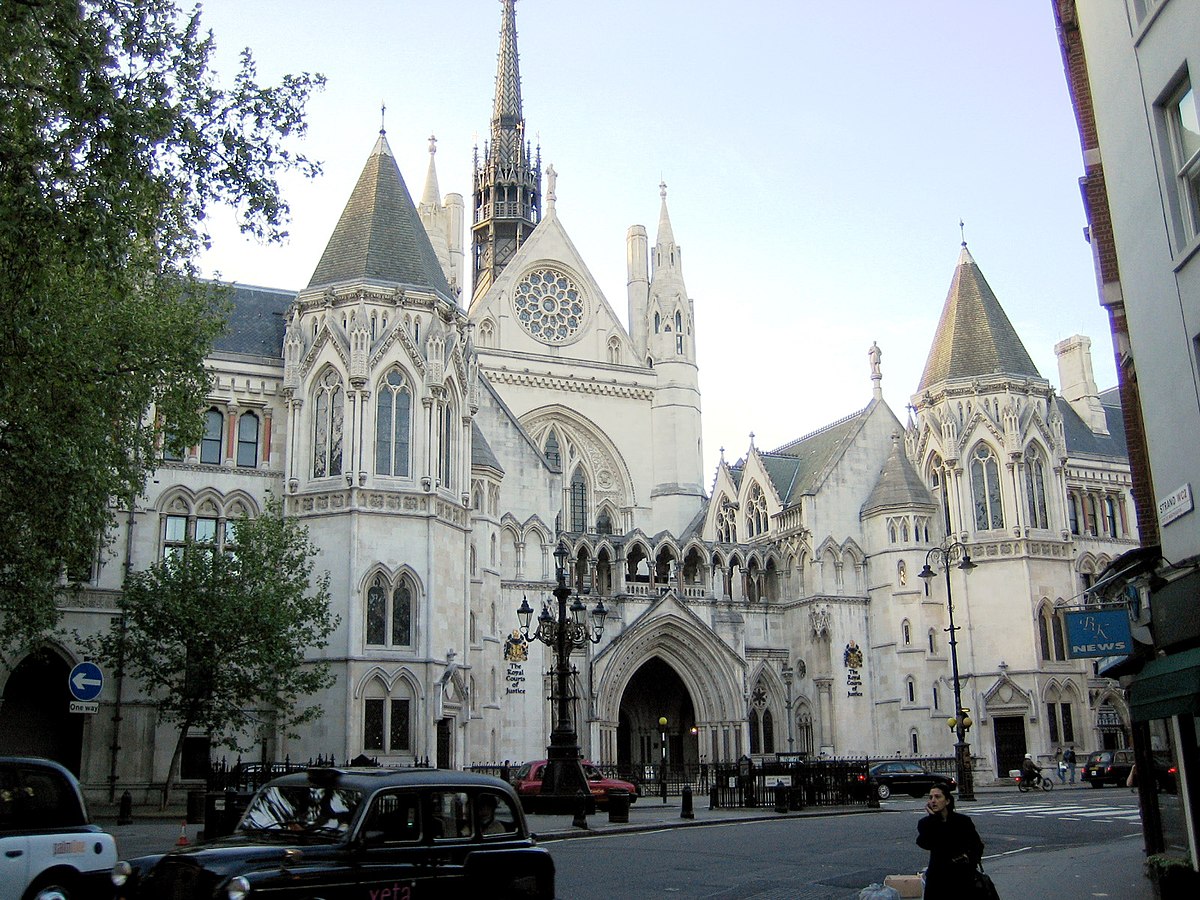
Royal Courts of Justice
Author Anthony M
Source Wikipedia
Creative Commons Licence


In the United Kingdom, as in many other countries, the unsuccessful party in civil litigation usually has to contribute substantially to the solicitors and counsel's fees of the successful party. The amount that the unsuccessful party has to pay is known as "costs" in England, Wales and Northern Ireland and "expenses" in Scotland. If there is serious doubt as to whether a claimant could or would pay such costs or expenses the courts if those jurisdictions have power to require him or her to give security (or in Scotland caution) for the costs. That typically takes the form of a deposit of money into an interest bearing account managed by the court but it could be a bank guarantee, insurance bond, escrow fund or other arrangement.

In England and Wales the power to order security for costs is governed by Section II of Part 25 of the Civil Procedure Rules. CPR 25.13 enables the court to make an order for security for costs if:
"(a) it is satisfied, having regard to all the circumstances of the case, that it is just to make such an order; and
(b) (i) one or more of the conditions in paragraph (2) applies, or
(ii) an enactment permits the court to require security for costs."
This is a very powerful weapon for defendants as it can stop a claim in its tracks.  The usual reason for an order is that:
"the claimant is a company or other body (whether incorporated inside or outside Great Britain) and there is reason to believe that it will be unable to pay the defendant’s costs if ordered to do so."
However, there are other grounds one of which is that the claimant is:
"(i) resident out of the jurisdiction; but
(ii) not resident in a Brussels Contracting State, a State bound by the Lugano Convention, a State bound by the 2005 Hague Convention or a Regulation State, as defined in section 1(3) of the Civil Jurisdiction and Judgments Act 1982."
It was on that ground that Mrs Justice Nicola Davies expressed willingness in  Sheikh Tahnoon Bin Saeed Bin Shakhboot Al Nehayan v Kent [2016] EWHC 623 (QB) (21 March 2016) to make a security for costs order (albeit limited in scope) against the sixth in line to the throne of Abu Dhabi who is a very wealthy man.

In this action the claimant claimed £2 million under an agreement with the defendant to invest in an hotel business. His claim form was issued on 8 July 2013 and a request was made for interim security on 10 Jan 2014. That was not provided to the defendant's satisfaction so he applied on 28 July 2015 for security in the sum of £1 million payable as follows:
"i) £400,000 within 35 days of the date of the court's order;
ii) £250,000 by no later than 35 days after the hearing of the restored CMC;
iii) £350,000 by no later than 2 days before the date fixed for the trial in the action."
The defendant's application notice provided for the claim to be struck out and judgment to be given to the defendant if such security was not given.

The defendant submitted that:
  1. He would face serious and substantial difficulties in seeking to enforce any costs award in his favour against the claimant having regard to the claimant's status as a senior member of the ruling family of Abu Dhabi and for position generally with respect to the enforceability in the UAE of judgments of the court of England and Wales.
  2. If the court were to ignore the standing of the claimant and concerns about the judicial system in the UAE, expert evidence before the court demonstrated that a costs order from the courts in England and Wales would not be enforced by the courts in the UAE.
In support of his first submission, the defendant relied on a report on the UAE by the United Nations Special Rapporteur on the Independence of Judges and Lawyers. The rapporteur found that:
"The justice system in the UAE has developed into an elaborate and complex court system in a relatively short time frame. Despite commendable progress and achievements the Special Rapporteur is concerned that the challenges and shortcomings she has identified are serious and negatively affect the delivery of justice, the enjoyment of human rights and the public's confidence in the judiciary. …"
 She found at para [28] of her report that:
"The federal system of the United Arab Emirates is complex and can be difficult to understand, in particular for non nationals, who constitute the majority of the population. During a visit, the Special Rapporteur was told that because of the complex superposition of federal and local laws, it is sometimes difficult for the public to know where the boundaries lie between the federal and local justice systems. There also appears to be a lack of consistency between the applications of federal laws between the Emirates. The Special Rapporteur is concerned about reports that it is difficult for people to know which legal provisions are applicable to them depending on where they are in the Federation, and that laws are sometimes applied in an arbitrary manner, that creates ambiguity and mistrust with both law enforcement authorities and the justice system."
There were also concerns about the independence of the judiciary, the absence of a formal distinction between the judiciary and the executive and particularly that the attorney-general was one of the 7 members of the federal supreme court and 3 others represented the executive.

In support of his second submission, the defendant relied on the evidence of a senior UAE lawyer  that it would be extremely difficulty and expensive to enforce a costs order against the claimant in the UAE.

At para [29] of her judgment, Mrs Justice Nicola Davies found no objectively justified grounds upon which to conclude that this defendant was unlikely to successfully obtain enforcement of a costs judgment against the claimant in the civil or commercial courts of the UAE but she did accept at [30] that the defendant would be likely to have to embark upon a legal process which could be lengthy and thus costly in order to attempt to obtain enforcement of a costs order. She formed the view that those difficulties would be better protected by a security for costs order tailored to the additional costs that the defendant would incur in enforcing a costs order. She made it clear that such an order would be limited in its amount and would not preclude this claimant from pursuing his claim.

As the defendant's application did not include such a claim and as no quantification had been provided, Her Ladyship left it to the parties to state in writing whether they could agree terms and to return for a second hearing if they could not.

An order of the kind proposed by the judge is unusual and would not have been made if the claimant had substantial assets in the United Kingdom. In expressing willingness to make it, she impliedly accepted at least some of the criticisms that had been made of the UAE and Abu Dhabi legal systems by the defendant. No doubt that is one of the reasons why the authorities in Dubai and Abu Dhabi have established special common law jurisdictions in their financial districts (see Jane Lambert Abu Dhabi Global Market - Yet Another Common Law Enclave in the Gulf 22 Feb 2016).

Should anyone wish to discuss this case or any of the issues raised in it he or she should call me on +44 (0)207 404 5252 during office hours or send me a message through my contact form. I should like to thank Mr Abdul Hafeezi of Freeman Harris for bringing this case to my attention.

    Friday, 28 November 2014

    Sky High Costs

    Burj Khalifa
    Photo Wikipedia


    In 2010 Hogan Lovells published "At what cost?" , a multi jurisdictional guide to litigation costs. A series of questions was presented to lawyers in each jurisdiction on the amount and recoverability of costs which were defined as
    "the costs incurred by a party during the course of litigation in connection to that litigation, and which include, but are not limited to, costs that the party has paid to its lawyers (including solicitors, counsel and advocates) to agents, to courts, to process servers and in respect of disbursements (for example, photocopying, expert witness, travel, translation, notarial services and witness attendance etc.)."
    Two of the jurisdictions it compared were the Dubai International Financial Centre ("the DIFC") and the rest of Dubai and the United Arab Emirates.  The information on both jurisdictions in Dubai was contributed by Hadef & Partners.

    As I explained in DIFC Courts 7 Jan 2014, the Centre has its own legal system based on the common law where proceedings are conducted in English before judges who have already held high judicial office in the United Kingdom and other Commonwealth countries. The rest of Dubai is a civil law jurisdiction where proceedings are conducted in Arabic. One of the most striking differences between the two systems is costs. In both jurisdictions the unsuccessful party pays the costs of the litigation which are unlimited in the DIFC. In the rest of Dubai they are generally limited to between 1,000 and 2,000 dirhams (£173 to £346 at current rates of exchange).

    The high cost of litigation in England and Wales has been a matter of concern in that country for many years. A recent report by the Legal Services Consumer Panel warned lawyers in England and Wales that they are not indispensable and risk being priced out of the market:
    "The core challenge ahead is to extend access to justice to those currently excluded from the market because they cannot afford legal services. This need and other forces, including government policy, consumer empowerment, technology and the effects of liberalisation, will combine to result in less involvement by lawyers in many of the tasks that until now have made up their staple diet. Consumers will seek alternatives to lawyers or use them in different ways. In place of lawyers will be greater self-lawyering, online services, entry by unregulated businesses, and also by regulated providers, such as accountants and banks, who will diversify into the law. Calls will grow for more radical solutions that cut lawyers out, such as an
    inquisitorial style of justice and online dispute resolution, which are better suited to the new funding realities. The consumer interest will lie in resolving the tension between cost and quality, and determining when a lawyer is needed and when alternatives can safely suffice. Regulated lawyers should be viewed as a small part of an increasingly diverse ecosystem of legal services delivery; improving access will require looking at how the whole system will work in future around consumer need."
    Those costs compared to the cost of litigation in the rest of Europe appear to be one of the reasons why the UK lags behind other European countries in the number of applications for European patents (see Jane Lambert UK slumps to Ninth Place in European Patent Applications 25 July 2014 NIPC Inventors Club). It is significant in that regard that the DIFC courts have never heard an intellectual property case (Why has no IP case come before the DIFC Courts? 19 March 2012).

    One of the justifications for the DIFC courts is that the adversarial system and the quality of the judges ensure high quality judicial decision making. While that is undoubtedly true where both parties are well resourced, disparity of means can sometimes defeat that objective - at least in England and Wales. For instance, a large retailer facing a copyright or design infringement action by a small company can apply for an order requiring the claimant to deposit money or give some other security for its costs of defending the claim under CPR 25.12. If the claimant fails to do so within the time specified in the order the claim is stayed and any interim injunction against the defendant is discharged. There is a similar rule under Part 25 of the DIFC Court Rules.  According to Hadef & Partners there is no equivalent rule in the rest of Dubai; but if the average award of costs is between 1,000 and 2,000 dirhams there would be no need for one.

    Should anyone wish to discuss this article or civil litigation generally, he or she should call me on +44 20 7404 5252 during office hours or send me a message through my contact form.