Showing posts with label UK. Show all posts

Sunday, 22 March 2026

Demand for English Legal Services in the Gulf

Map indicating GCC members
Author Masterdeis Licence CC BY-SA 3.0  Source Wikimedia Commons


Jane Lambert

For many years, the members of the Gulf Cooperation Council and neighbouring states have been a large and growing market for British goods and services.  To support suppliers of those goods and services, many British law firms and some chambers have established a presence in the region.  The Dubai International Financial Centre, Abu Dhabi Global Market and the Qatar Financial Centre have set up English-speaking common law courts to resolve disputes within their jurisdictions.

I have been following those developments in this publication for over 15 years.  Stephen Somerville, one of our most senior staffers, has made several visits to Dubai to promote the services of our members.

It goes without saying that the current hostilities in the region are bad for business, and the longer they continue, the more difficult it will be.  Much will depend on the outcome.  For instance, whether the US and Israeli forces break Iranian resistance or harden it and the type of regime that eventually emerges in Tehran.   In that regard, it must be remembered that countries have interests and that a more liberal successor to the present theocracy may not have altogether different ambitions.   Russia can no longer be described as a socialist state, but its conduct in international affairs is not very different from that of the former Soviet Union.  

For the moment, the courts continue to sit.  Both the DIFC and the ADGM courts have delivered judgments since 28 Feb 2026.  I am reminded of an observation by Sir Robin Jacob when he spoke in Leeds last month (see Robin Jacob Visits Leeds 1 March 2026 NIPC Yorkshire).  He said that while Adolf was pounding the United Kingdom, the House of Lords was deciding King Features Syndicate Inc. v Kleeman (O. & M.) Ltd, [1941] A.C. 417 | [1941] 2 All E.R. 403 | [1941] 5 WLUK 46.  That case moulded product design law in the UK and much of the Commonwealth until 1989.   In some areas of the law, such as frustration of contracts and force majeure, there may even be an uptick in work in the short term, as there was in London immediately after Suez.  

I shall continue to monitor developments and report the more significant ones here.  Anyone wishing to discuss this article may call me on +44 (0)20 7404 5252 during office hours or send a message through my contact form at any time.


Wednesday, 31 July 2024

Why is there no longer a British IP Attaché to the Gulf Co-operation Council?

Author IJA Public Domain Source Wikimedia Commons
British EmbassyAbu Dhabi


Jane Lambert

The UK Intellectual Property Office has published a Linkedin newsletter called IPO OverseasIt is about the UK's network of overseas IP attachés, trade experts and UK-based policy teams.  The latest issue, which was published on 26 July 2024, is entitled "IPO's Middle East and North Africa ('MENA') International Team.,  Although the subtitle is "How our IP Attaché network can help you do business with the Middle East and North Africa" the publication features an interview with  Ben Llewellyn-Jones, IPO’s Director of Business and International Policy and not with an attaché.

The British government used to have an attaché to the Gulf Cooperation Council ("GCC"), On 27 Oct 2021 I wrote that HM government signalled the importance of the GCC as a trading and investment partner by appointing Yamish Yakoob as its first Intellectual Property Attaché to the bloc in UK's New Intellectual Property Attache to the GCCI based my article on the IPO's Case Study IP Attaché: Yamish Yakoob, Gulf Cooperation Council of 7 Oct 2021 which was apparently withdrawn on 27 March 2024.  No explanation has been given for the withdrawal.  Mr Yakoob is still at the British embassy in Riyadh but his new job title is "Retail, Food & Drink @ British Embassy." His LinkedIn page indicates that he started that job in April 2024.

In his interview, Mr Llewellyn-Jones said that the GCC is this country's 4th largest non-EU trading partner after the USA, China and Switzerland and that British trade with that region is worth around £59 billion.  He indicated that the government is negotiating a free trade agreement with the GCC.  He mentioned that UK businesses can face a number of challenges when registering and protecting their IP in the Middle East. These can range from the need to take effective action against trade mark infringement to high registration fees.

Mr Llewellyn Jones encouraged British businesses to use the IPO's international team: The team knows that local IP systems can be difficult for some to navigate even if a business has registered its IP in the UK with the IPO. He said:

“This is where our international team can help with their local knowledge”, said Ben. “We can help to guide businesses through these IP systems, guide you through what to expect and support you as you build your business overseas”

His top tips were:

  • "If you're looking to trade in MENA and the GCC, include IP as part of your market research or export plan
  • Do your due diligence and check, for example, if someone already registered a trade mark that is the same as yours. If you're not sure, we'll have a complex portfolio of IP rights and legal experts who will be able to help you.
  • Finally, if your IP is an important part of your business value, register your rights as soon as you can!"
The British government has published further guidance and information on doing business and the IP issues that arise in the Middle East which is not linked directly to the IPO's newsletter.   However, I incorporated that guidance and information and combined it with my own in IPO Guidance on the Gulf Cooperation Council on 8 April 2023.

One resource that the IPO does not mention and perhaps should is that there are English-speaking common law courts in Dubai, Abu Dhabi and Qatar.  Each of those courts has judges who practised in the UK or other Commonwealth common law jurisdictions and all members of the Bar of England and Wales can qualify easily to appear before them.  If a British company is thinking of licensing its technology, distributing its goods or franchising its services in the region it may find advantages in choosing the law of one of those legal systems as the proper law and its courts as the forum for future dispute resolution. 

This is an area in which my chambers have some expertise.  Colleagues who practise other areas of law already appear before those courts.  Last year, Stephen Somerville, our first deputy senior clerk visited Dubai and he has been sufficiently encouraged by that visit to make a second trip later this year.   Anyone interested in using our expertise and connections should contact me on +44 (0)20 7404 5252 during UK office hours or send me a message at other times through my contact page.

Saturday, 8 April 2023

IPO Guidance on the Gulf Cooperation Council

 Logo of Gulf Cooperation Council

Jane Lambert

On 6 April 2023 the UK Intellectual Property Office ("the IPO") circulated an email headed "Are you a UK business trading in the Gulf Cooperation Council (GCC)? Or thinking of doing so?" to its mailing list, The email announced that the IPO had published guidance to help businesses navigate the IP regimes in each of the six GCC member states providing information on the main IP rights and where to go for further guidance,  It added that the GCC was the UK's 7th largest export market worth £33.1 billion in 2021, that the UK has a longstanding relationship with the GCC, particularly in areas like technology, life sciences, creative industries, financial services and education, and that intellectual property will play a vital role in securing British ambitions in the region.

International IP Service

A button on the email connects to a web page on the British government's website headed Collection International IP Service with the strapline "Protecting your trade marks, patents, designs and copyright abroad" which was first published on 20 Aug 2021 and last updated on 10 March 2023.  It begins with a general observation:

"Intellectual property rights are territorial. You should consider getting IP protection if you want to trade overseas or sell to overseas customers via the internet. Start by developing an international strategy, identifying your markets, business goals and resources."

 I would endorse that advice adding only that an international strategy is an aspect of an IP strategy which is something that every business should develop whether an individual on his or her first day in business or a mighty multinational  (see What is an Intellectual Property Strategy? 19 May 2017 last updated 8 April 2023).  I could help with that as I have many years experience of advising on IP strategy and have written many articles on the topic.

Top Tip

I would also endorse the IPO's "Top Tip":

"Know before you go. Wherever you want to do business, it is important that you understand the steps you should take to protect your IP before entering the market. It is a lot easier to jump over any hurdles before realising it might be too late to act. You will also need to do some research to make sure you’re not infringing someone else’s IP."

Meet the Experts: Yamesh Yaqoob

The next link introduces our IP attachés which are listed on a separate Attaché contact details page.  Our main in the GCC countries is Mr Yamish Yaqoob whose appointment I reported in UK's New Intellectual Property Attache to the GCC on 27 Oct 2021.  The section on Mr Yaqoob states:

"Focus on the GCC: Yamish provides guidance to UK stakeholders in the GCC region on how to effectively protect and manage their IP assets. He also works closely with regional IPOs and official authorities on outreach and awareness raising of the value of IP. Yamish will input on IP in a Free Trade Agreement with the GCC, to further build bilateral cooperation within the GCC on IP practice and policy. Currently, he is also working in close collaboration with the Saudi IP authority on delivering a joint work plan aimed at improving the local IP ecosystem."
IP Country Guides

The International IP Service page links to a list of IP Country Guides.  These include guides on:

Each of those guides was published on 2 March 2023 and follows a similar format.  There are passages on trade marks, patents, designs, copyright, enforcement and sources of further information.

The guidance on the UAE fails to mention the English speaking common law jurisdictions in the Abu Dhabi Global Market and the Dubai International Financial Centre free zones.  I have discussed the DIFC courts extensively in this publication and I introduced the Abu Dhabi Global Market legal system in Abu Dhabi Global Market - Yet Another Common Law Enclave in the Gulf on 22 Feb 2016.  It is worth remembering that the DIFC has its own intellectual property legislation which I mentioned in Introduction to, and Overview of, the New DIFC Intellectual Property Law on 13 Dec 2019.  The DIFC courts have always had jurisdiction to hear and determine breach of confidence and passing off and there seems to be no reason in principle why they should not grant injunctions, delivery up of infringing matter and pecuniary relief for infringements of the DIFC Intellectual Property Law.  Having said that, the Law establishes an Intellectual Property Commissioner with extensive powers to resolve IP disputes.

There is a similar English speaking common law jurisdiction at the Qatar Financial Centre known as the  Qatar International Court and Dispute Resolution Centre which I discussed in Qatar Financial Centre: Civil and Commercial Court Regulations on 28 June 2011 and subsequent articles.  The IPO guidance on Qatar does not mention that court or legal system.

Any member of the Bar of England and Wales in good standing can quickly be granted rights of audience in any of those courts.  The procedural law and practice of all three courts are modelled on the English Civil Procedure Rules.  Much of the substantive law is also modelled on British statutes or codifications of English case law. Some of the litigation is conducted online which means that members of the English bar can represent parties from their chambers in London or even their homes elsewhere in the UK. 

Anyone wishing to discuss this article may call me on +44 (0)20 7404 5252 or send me a message through my contact page.

Thursday, 24 March 2016

When an Abu Dhabi Royal sues in England: Sheikh Tahnoon Bin Saeed Bin Shakhboot Al Nehayan v Kent

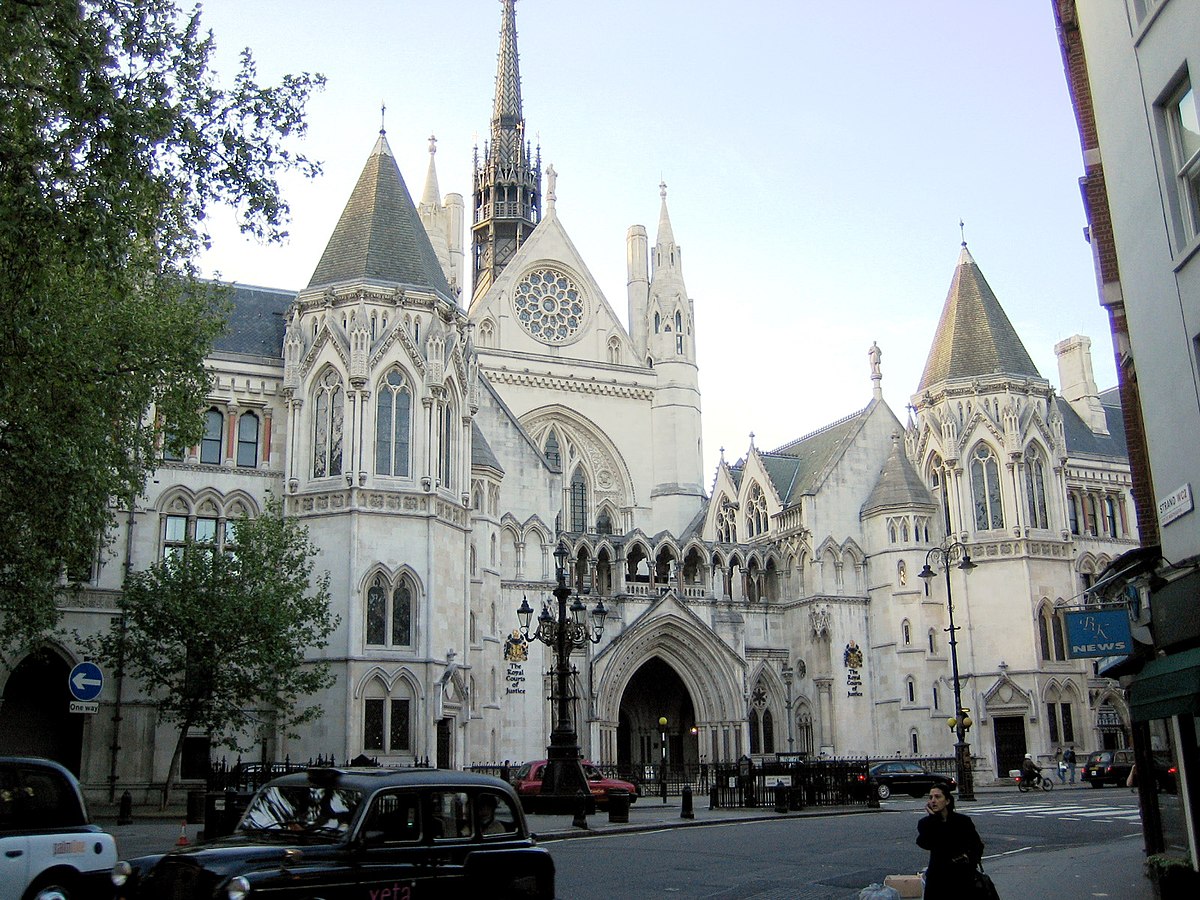
Royal Courts of Justice
Author Anthony M
Source Wikipedia
Creative Commons Licence


In the United Kingdom, as in many other countries, the unsuccessful party in civil litigation usually has to contribute substantially to the solicitors and counsel's fees of the successful party. The amount that the unsuccessful party has to pay is known as "costs" in England, Wales and Northern Ireland and "expenses" in Scotland. If there is serious doubt as to whether a claimant could or would pay such costs or expenses the courts if those jurisdictions have power to require him or her to give security (or in Scotland caution) for the costs. That typically takes the form of a deposit of money into an interest bearing account managed by the court but it could be a bank guarantee, insurance bond, escrow fund or other arrangement.

In England and Wales the power to order security for costs is governed by Section II of Part 25 of the Civil Procedure Rules. CPR 25.13 enables the court to make an order for security for costs if:
"(a) it is satisfied, having regard to all the circumstances of the case, that it is just to make such an order; and
(b) (i) one or more of the conditions in paragraph (2) applies, or
(ii) an enactment permits the court to require security for costs."
This is a very powerful weapon for defendants as it can stop a claim in its tracks.  The usual reason for an order is that:
"the claimant is a company or other body (whether incorporated inside or outside Great Britain) and there is reason to believe that it will be unable to pay the defendant’s costs if ordered to do so."
However, there are other grounds one of which is that the claimant is:
"(i) resident out of the jurisdiction; but
(ii) not resident in a Brussels Contracting State, a State bound by the Lugano Convention, a State bound by the 2005 Hague Convention or a Regulation State, as defined in section 1(3) of the Civil Jurisdiction and Judgments Act 1982."
It was on that ground that Mrs Justice Nicola Davies expressed willingness in  Sheikh Tahnoon Bin Saeed Bin Shakhboot Al Nehayan v Kent [2016] EWHC 623 (QB) (21 March 2016) to make a security for costs order (albeit limited in scope) against the sixth in line to the throne of Abu Dhabi who is a very wealthy man.

In this action the claimant claimed £2 million under an agreement with the defendant to invest in an hotel business. His claim form was issued on 8 July 2013 and a request was made for interim security on 10 Jan 2014. That was not provided to the defendant's satisfaction so he applied on 28 July 2015 for security in the sum of £1 million payable as follows:
"i) £400,000 within 35 days of the date of the court's order;
ii) £250,000 by no later than 35 days after the hearing of the restored CMC;
iii) £350,000 by no later than 2 days before the date fixed for the trial in the action."
The defendant's application notice provided for the claim to be struck out and judgment to be given to the defendant if such security was not given.

The defendant submitted that:
  1. He would face serious and substantial difficulties in seeking to enforce any costs award in his favour against the claimant having regard to the claimant's status as a senior member of the ruling family of Abu Dhabi and for position generally with respect to the enforceability in the UAE of judgments of the court of England and Wales.
  2. If the court were to ignore the standing of the claimant and concerns about the judicial system in the UAE, expert evidence before the court demonstrated that a costs order from the courts in England and Wales would not be enforced by the courts in the UAE.
In support of his first submission, the defendant relied on a report on the UAE by the United Nations Special Rapporteur on the Independence of Judges and Lawyers. The rapporteur found that:
"The justice system in the UAE has developed into an elaborate and complex court system in a relatively short time frame. Despite commendable progress and achievements the Special Rapporteur is concerned that the challenges and shortcomings she has identified are serious and negatively affect the delivery of justice, the enjoyment of human rights and the public's confidence in the judiciary. …"
 She found at para [28] of her report that:
"The federal system of the United Arab Emirates is complex and can be difficult to understand, in particular for non nationals, who constitute the majority of the population. During a visit, the Special Rapporteur was told that because of the complex superposition of federal and local laws, it is sometimes difficult for the public to know where the boundaries lie between the federal and local justice systems. There also appears to be a lack of consistency between the applications of federal laws between the Emirates. The Special Rapporteur is concerned about reports that it is difficult for people to know which legal provisions are applicable to them depending on where they are in the Federation, and that laws are sometimes applied in an arbitrary manner, that creates ambiguity and mistrust with both law enforcement authorities and the justice system."
There were also concerns about the independence of the judiciary, the absence of a formal distinction between the judiciary and the executive and particularly that the attorney-general was one of the 7 members of the federal supreme court and 3 others represented the executive.

In support of his second submission, the defendant relied on the evidence of a senior UAE lawyer  that it would be extremely difficulty and expensive to enforce a costs order against the claimant in the UAE.

At para [29] of her judgment, Mrs Justice Nicola Davies found no objectively justified grounds upon which to conclude that this defendant was unlikely to successfully obtain enforcement of a costs judgment against the claimant in the civil or commercial courts of the UAE but she did accept at [30] that the defendant would be likely to have to embark upon a legal process which could be lengthy and thus costly in order to attempt to obtain enforcement of a costs order. She formed the view that those difficulties would be better protected by a security for costs order tailored to the additional costs that the defendant would incur in enforcing a costs order. She made it clear that such an order would be limited in its amount and would not preclude this claimant from pursuing his claim.

As the defendant's application did not include such a claim and as no quantification had been provided, Her Ladyship left it to the parties to state in writing whether they could agree terms and to return for a second hearing if they could not.

An order of the kind proposed by the judge is unusual and would not have been made if the claimant had substantial assets in the United Kingdom. In expressing willingness to make it, she impliedly accepted at least some of the criticisms that had been made of the UAE and Abu Dhabi legal systems by the defendant. No doubt that is one of the reasons why the authorities in Dubai and Abu Dhabi have established special common law jurisdictions in their financial districts (see Jane Lambert Abu Dhabi Global Market - Yet Another Common Law Enclave in the Gulf 22 Feb 2016).

Should anyone wish to discuss this case or any of the issues raised in it he or she should call me on +44 (0)207 404 5252 during office hours or send me a message through my contact form. I should like to thank Mr Abdul Hafeezi of Freeman Harris for bringing this case to my attention.

    Wednesday, 24 December 2014

    Reem Al Marzouqi - an Emirati inventor

    Jane Lambert


    I an grateful to Mr Mohamed Al Hemairy, Head of Intellectual Property & Patent Commercialization at the United Arab Emirates University, for bringing Aamera Jiwaji's article Patent Experience 23 Dec 2014 BQ to my attention.  It is about a young woman called Reem Al Marzouqi who has invented means of driving a car without hands. 

    According to the article:
    "More than a year has passed since a shy Emirati student and her two colleagues of UAE University made international headlines for inventing a system that allows a disabled person to drive a vehicle using only their feet. But little has happened in the last three years, despite her university’s best efforts to facilitate the process, spotlighting whether the GCC is truly ready to become a regional hub for innovation and intellectual property matters."
    The University saw the potential of Reem's invention and allocated two mechanical engineering students and their supervisor to assist her. Applications have been filed for patents in the USA, European Patent Office, China and Japan though apparently not the Gulf Co-operation Council Parent Office.

    Those patent applications must have cost a lot of money and their maintenance and enforcement will cost a great deal more. The work that has been carried out by the mechanical engineering students and supervisor will also have come at a cost though they will all have gained valuable product development experience. Unless and until a manufacturer or user applies for a licence to work Reem's invention there is a risk that this investment will not be recovered.

    Yet even if that happens it is no reason to doubt the GCC states' capacity to become "a regional hub for innovation and intellectual property matters." The fact that Reem came up with the idea in the first place indicates that there are talented young men and women in the region. The University's willingness to invest in the invention is also to the region's credit. Reem's experience is one that has been shared by countless private inventors throughout the world including the UK and USA. I can say that from bitter experience because I have set up and chaired inventors clubs in Leeds, Liverpool and Sheffield, run IP clinics throughout the UK and spent most of my career advising and representing start-ups and other small and medium enterprises.

    Reem's problem is that she is an independent inventor and not a member of a major vehicle manufacturer or other big institution's research and development department. If you look at page 9 of the UK Intellectual Property Office's publication Facts and Figures you will notice names like IBM, HP, Schlumberger and Rolls Royce in the table of top 10 patentees. The patent system in most countries (if not every country of the world) is designed to assist big businesses. It is very tough indeed for anyone else to get a look in. The remark attributed to Ralph Waldo Emerson "Build a better mousetrap, and the world will beat a path to your door" is simply not true. And to be fair to Emerson what he actually said was:
    "If a man has good corn or wood, or boards, or pigs, to sell, or can make better chairs or knives, crucibles or church organs, than anybody else, you will find a broad hard-beaten road to his house, though it be in the woods."
    Having said that it was not necessary a bad thing to apply for a patent or other intellectual property right for a useful invention like Reem's but applying for a patent for an invention and then licensing it is putting the cart before the horse.

    Intellectual property exists to protect investment in branding, design, technology and works of art and literature but does not necessarily stimulate it. What stimulates such investment is the promise of a return through the use or sale of an invention, the publication of a blockbuster novel and so on.  When I am asked to advise a new business on patenting or other IP protection I take the entrepreneur through the following exercise:

    • Identify the revenue streams for your business over the period of your business plan;
    • Consider the threats to each of those revenue streams;
    • What counter-measures can you take to avert those threats.
    In most cases the threats are commercial - a competing product, a technical advance or changing consumer spending - and in most instances so are the countermeasure - reducing your prices, developing new products or services or finding new markets. Only very rarely is obtaining legal protection (that is to say a patent or other intellectual property right) the main answer. Even then a patent may not be the best answer because there are other forms of legal protection for new products and services such as the law of confidence which protects trade secrets or in the UK unregistered design right. Such alternatives are often unregistered rights and therefore free.

    So what should Reem do now that she or her University has spent a lot of money on developing and patenting her invention? The obvious thing is to find a market and that is most likely to be found in a highly developed country with its own motor manufacturing industry with high welfare spending for disabled persons. I have no idea whether there is a market here but I do know that there is a scheme to adapt motor vehicles for disabled persons called Motability in the UK. There are probably bigger and better schemes in other countries. If I were Reem I would be exploring all those possibilities and perhaps also talking to the motor manufacturers.

    Perhaps Reem, Mr Al Hemairy or someone else at the UAEU has thought of all that and done all these things. If so, excuse my impertinence. But if not, it's an idea isn't it and this article may help other inventors  in the GCC. If any of those inventors or entrepreneurs wants to discuss this article he or she can call me on +44 20 7404 5252 during office hours (remembering that we have 3 public holidays between now and 2 Jan 2015) or send me a message through my contact form

    I should like to wish Reem, her helpers and university all the best and urge them not to be discouraged. There's plenty of scope for enterprise and innovation in the GCC states. The rest of the world owes a great debt of gratitude to the Arab world for the work of its scholars and scientists in the past. The fact that we use 1, 2, 3, 4 and 5 rather than I, II, III, IV and V for counting is a constant reminder of that debt. There is no reason why the GCC - indeed the whole Middle East North Africa region - could not be a great source of ideas and technology again.